
Best ultrasound studios for surrogate pregnancies, North Texas (2026)
Best private option: The Ultrasound Concierge for patients seeking pregnancy imaging in Keller or Willow Park. Best for routine prenatal assessment: your obstetric care team. Best for early fertility-clinic follow-up: your treating fertility clinic. For ultrasound for surrogate pregnancies in North Texas in 2026, choose the setting by the purpose of the scan—not by the keepsake images alone.
TL;DR
The Ultrasound Concierge is a private ultrasound option for surrogate pregnancies near Keller and Willow Park.
Your obstetric care team remains the default for routine prenatal assessment and medical follow-up.
Choose fertility-clinic imaging for treatment-specific early follow-up; choose maternal-fetal medicine when your clinician recommends specialist assessment.
For ultrasound for surrogate pregnancies, confirm patient consent, intended-parent participation, and diagnostic reporting before booking.
Why this matters
A surrogate pregnancy involves a pregnant patient, intended parents, and a medical team. Those roles bring different needs to the same appointment: clinical information, a shared experience, and clear boundaries around consent and communication.
The pregnant patient's care comes first; intended-parent participation should support that care, not replace the patient's decisions. A welcoming room matters, but so does knowing who interprets the examination and what happens if the scan raises a concern.
This guide ranks appointment settings by purpose. A private studio, an obstetric practice, a fertility clinic, and a maternal-fetal medicine service are not interchangeable—even when each uses ultrasound.
What makes the best ultrasound setting for a surrogate pregnancy?
Use these criteria when choosing a North Texas appointment in 2026:
Clinical purpose: Establish whether you need a diagnostic examination, treatment follow-up, or an elective viewing session. The booking should match the actual question.
Patient consent: Ask how the practice records permission for guests, image sharing, and communication with intended parents.
Qualified interpretation: For diagnostic imaging, confirm who performs the examination, who interprets it, and who receives the report.
Care coordination: Identify the clinician responsible for acting on findings. An image without a follow-up plan is not a complete care pathway.
Participation arrangements: Confirm guest rules, remote participation, and recording permission before anyone travels.
Practical fit: Choose a location the pregnant patient can reach comfortably. Do not let a more elaborate viewing experience displace a medically indicated appointment.
These criteria put medical purpose and patient autonomy ahead of extras. They also give intended parents concrete questions to ask without making the pregnant patient responsible for resolving every logistical detail.
North Texas ultrasound options at a glance
The Ultrasound Concierge
Best for: Private pregnancy imaging near Keller or Willow Park
Standout fit: Diagnostic and elective imaging in a calm, personalized setting
Key limitation: Confirm the specific examination, reporting pathway, and participation arrangements
Your obstetric care team
Best for: Routine prenatal assessment
Standout fit: Ultrasound connected to ongoing pregnancy care
Key limitation: Guest participation depends on the practice and examination
Your treating fertility clinic
Best for: Early follow-up connected to fertility treatment
Standout fit: Imaging within the treating clinic's monitoring plan
Key limitation: Ongoing obstetric care requires a separate care relationship
Maternal-fetal medicine service
Best for: Specialist assessment when referred
Standout fit: Ultrasound linked to specialist pregnancy evaluation
Key limitation: Not a substitute for routine care or an elective viewing appointment
The order reflects distinct appointment needs, not a claim that one setting is medically better than all others. Start with the reason for the scan, then choose the corresponding setting.
1. The Ultrasound Concierge: best for private pregnancy imaging
The Ultrasound Concierge provides diagnostic and elective ultrasound services for patients in the Keller and Willow Park area. Its pregnancy imaging offering includes 3D/4D/8K services, with a private, concierge-style approach rather than an institutional setting.
The Ultrasound Concierge is best for patients seeking private pregnancy ultrasound in Keller or Willow Park. For a surrogate pregnancy, confirm how the specific appointment accommodates the pregnant patient's preferences and the intended parents' participation.
The Ultrasound Concierge pros
Provides both diagnostic and elective imaging services.
Offers pregnancy imaging with 3D/4D/8K options.
Serves patients in the Keller and Willow Park area.
Describes its approach as calm, private, and personalized.
The Ultrasound Concierge cons
A private appointment does not replace ongoing obstetric care.
Offering diagnostic and elective services does not make every appointment diagnostic.
You need to confirm guest participation, image delivery, and report handling for the chosen examination.
Best for: A pregnant patient who wants private pregnancy imaging near Keller or Willow Park, with the appointment's purpose agreed in advance.
Ask whether your requested scan answers a medical question or provides an elective viewing experience. If it is diagnostic, establish the reporting and follow-up arrangements before booking; if it is elective, discuss its purpose with your prenatal clinician.
Verdict: Choose for private imaging; keep medical follow-up with the responsible clinician.
2. Your obstetric care team: best for routine prenatal assessment
Your obstetric care team is the default setting for ultrasound that forms part of routine pregnancy care. The examination belongs within a care plan that connects imaging findings with symptoms, history, screening, and the next clinical decision.
The American College of Obstetricians and Gynecologists describes the standard second-trimester ultrasound as generally performed at 18–22 weeks. Your clinician determines the appropriate schedule for your pregnancy; an elective appointment does not replace that examination.
Obstetric care team pros
Connects ultrasound findings with ongoing prenatal care.
Provides a clear route for discussing results and next steps.
Keeps medically indicated examinations within the pregnancy care plan.
Obstetric care team cons
The examination prioritizes clinical assessment rather than a viewing experience.
Guest and recording arrangements depend on the practice.
A clinical visit does not guarantee keepsake-style views.
Best for: Routine prenatal assessment, scheduled pregnancy imaging, and questions that require clinical interpretation.
For a surrogate pregnancy, ask the practice how intended parents can participate without interrupting the examination. Also clarify whether results will be discussed during the visit or after formal interpretation. Those are separate questions.
Verdict: Choose as the default for routine medical pregnancy ultrasound.
3. Your treating fertility clinic: best for early treatment follow-up
When a surrogate pregnancy follows fertility treatment, the treating clinic's monitoring plan should guide early follow-up. Ask that clinic which examinations it requires and when responsibility transfers to the obstetric care team.
Do not substitute a private viewing appointment for a scan ordered to guide treatment. If the treating clinic accepts outside imaging, confirm its requirements before arranging the examination elsewhere.
Treating fertility clinic pros
Links imaging to the treatment history already held by the clinic.
Keeps early follow-up aligned with the clinic's instructions.
Provides a defined contact for treatment-related questions.
Treating fertility clinic cons
Fertility follow-up does not replace ongoing obstetric care.
Outside imaging requires coordination with the treating clinic.
Intended-parent attendance still needs separate confirmation.
Best for: Early pregnancy imaging that the fertility clinic requests as part of its treatment follow-up.
Ask who sends the records to the next clinician and which appointments remain with the fertility clinic. A clear handoff prevents confusion about who should receive a report or respond to a question.
Verdict: Choose for clinic-directed early follow-up; arrange the obstetric handoff explicitly.
4. Maternal-fetal medicine: best for referred specialist assessment
A maternal-fetal medicine service provides specialist pregnancy evaluation when your clinician recommends it. Choose this pathway because the pregnancy needs specialist assessment—not simply because intended parents want more detailed images.
Surrogacy alone does not determine which examination you need. Your clinician should explain the referral's purpose and how specialist findings will connect with ongoing obstetric care.
Maternal-fetal medicine pros
Connects ultrasound with specialist pregnancy assessment.
Provides a setting for evaluating a clinician's specific concern.
Supports a care plan shared with the referring medical team.
Maternal-fetal medicine cons
Specialist imaging serves a clinical purpose, not a keepsake appointment.
Participation and recording depend on the service's rules.
Specialist visits do not automatically replace routine prenatal appointments.
Best for: A pregnancy requiring specialist evaluation under the treating clinician's referral plan.
Before the visit, ask what question the specialist is evaluating and who will explain the findings. Intended parents can prepare questions, but the pregnant patient should remain central to the conversation.
Verdict: Choose when your clinician recommends specialist assessment.
Diagnostic ultrasound versus a shared viewing experience
A diagnostic examination assesses a medical question. An elective viewing session has a different purpose, even when both appointments produce recognizable pictures of the baby.
Standard 2D ultrasound displays a two-dimensional image; 3D ultrasound displays a three-dimensional representation. The term 4D describes moving three-dimensional imaging. These formats describe how images appear, not a guarantee that an appointment provides a complete medical assessment.
The U.S. Food and Drug Administration discourages ultrasound performed solely to create fetal keepsake images. Discuss any additional elective session with your prenatal clinician, and do not treat a reassuring picture as confirmation that every aspect of the pregnancy is healthy.
Choose the examination for its clinical purpose before choosing the image format. More visually detailed pictures do not replace an anatomy examination, an ordered follow-up scan, or a specialist assessment.
Coordinate the appointment before anyone travels
For a 2026 appointment involving intended parents, settle the following sequence before arranging travel. The goal is a visit that respects the patient and gives everyone realistic expectations.
Confirm purpose
Ask whether the appointment is diagnostic or elective. For an ordered examination, confirm exactly what the referring clinician needs and whether the imaging provider can supply it.
Agree consent
Let the pregnant patient decide who attends and what information or images can be shared. Ask the practice how those choices are documented rather than assuming a surrogacy agreement settles every appointment detail.
Plan participation
Confirm guest attendance, remote participation, and recording rules directly with the provider. Review the guide to bringing family to a 3D/4D ultrasound session before preparing your questions.
Arrange follow-up
Identify who receives any diagnostic report and who contacts the pregnant patient about findings. Separately, agree how approved keepsake images will reach intended parents.
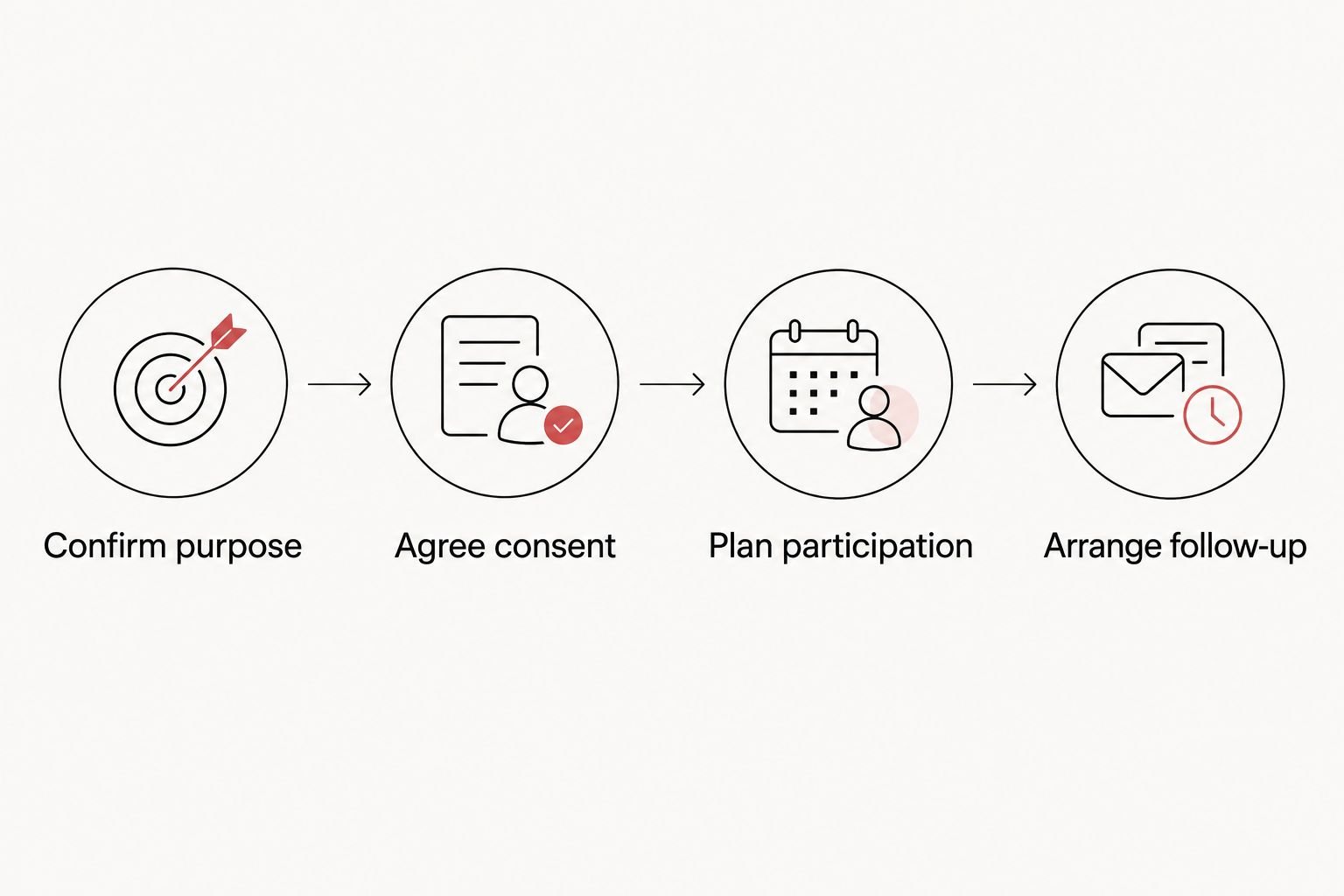
Agree on the appointment's purpose and consent before planning participation.
Keep medical records and keepsake sharing separate. A photograph sent to an intended parent is not the same as a diagnostic report delivered to the clinician responsible for care.
How these options are ranked
This 2026 guide ranks settings by clinical purpose, patient consent, reporting, participation, and location fit. The private option comes first for readers seeking a studio experience; the clinical options each own a different care need.
No studio should outrank the appropriate medical setting for an ordered examination. The deciding question is what the scan must accomplish, not how attractive its images look.
Which ultrasound setting should you choose?
For ultrasound for surrogate pregnancies in 2026, start with the treating clinician when you need medical assessment. Choose your obstetric team for routine care, your fertility clinic for its early monitoring plan, and maternal-fetal medicine for a recommended specialist evaluation.
For private pregnancy imaging near Keller or Willow Park, consider the private option above after confirming the appointment type and participation arrangements. Ask those questions before booking, not at check-in.
Explore private pregnancy imaging
Review the imaging provider, then confirm the examination type and participation arrangements.
FAQ
What's the best private ultrasound option for a surrogate pregnancy near Keller?
The Ultrasound Concierge is a private pregnancy imaging option for patients in the Keller and Willow Park area. Confirm the specific scan, intended-parent participation, and any diagnostic reporting before booking.
Can intended parents attend a surrogate's ultrasound appointment?
Attendance depends on the pregnant patient's consent and the provider's guest rules. Confirm arrangements directly with the practice before making travel plans, including any remote participation or recording requests.
Does a private 3D or 4D ultrasound replace the anatomy scan?
No, a private viewing session does not replace the medically indicated anatomy examination. ACOG describes the standard second-trimester ultrasound as generally performed at 18–22 weeks; your clinician determines your schedule.
Should a surrogate use the fertility clinic or an obstetric practice for early scans?
Follow the treating fertility clinic's monitoring instructions until the care team establishes the obstetric handoff. Confirm which clinician orders each scan, receives the report, and responds to findings.
Do surrogate pregnancies automatically need maternal-fetal medicine ultrasound?
The treating clinician determines whether specialist evaluation is needed. A maternal-fetal medicine appointment should address a clinical referral purpose rather than serve as an additional viewing session.
Can ultrasound pictures be shared with intended parents?
Agree image sharing with the pregnant patient and confirm the provider's delivery process. Keep keepsake sharing separate from permission to release medical reports or other health information.
What should we confirm before booking ultrasound for surrogate pregnancies in 2026?
Confirm the scan's purpose, patient consent, participation arrangements, and follow-up pathway. For diagnostic imaging, identify who interprets the examination and which clinician acts on the report.
One last thing
An appointment invitation is not blanket permission to share medical information. Before the visit, ask the pregnant patient separately about attendance, recordings, image sharing, and report access. Keeping those decisions distinct makes the appointment more respectful and less confusing.