
Best ultrasound studios for high-BMI pregnancies, North TX (2026)
Best local option to discuss a private elective visit: The Ultrasound Concierge, serving Keller and Willow Park. Best for routine pregnancy assessment: your prenatal practice; best for specialist assessment: a maternal-fetal medicine service when your clinician recommends one. This 2026 guide explains how to choose a setting for a high-BMI pregnancy without confusing keepsake images with medical care.
TL;DR
For 3d 4d ultrasound high bmi pregnancy searches, choose by scan purpose before comparing image styles.
The Ultrasound Concierge offers private diagnostic and elective pregnancy ultrasound services in Keller and Willow Park.
Your prenatal practice is the starting point for medically necessary pregnancy imaging and follow-up.
Higher BMI can affect ultrasound visibility; it does not determine whether you will get a recognizable image.
Ask about image limitations, clinical oversight, and next steps before arranging an elective visit.
Why this matters
A good studio explains what the scan can show—and what it cannot. Higher BMI can make some ultrasound views harder to obtain because sound must travel through more tissue. That is an imaging limitation, not a personal failing or a reason to expect dismissive care.
Your baby's position, gestational age, surrounding fluid, and structures in front of the face also affect visibility. BMI alone cannot predict the result of an individual appointment. A provider should discuss those factors together rather than promise a clear portrait or assume that useful images are impossible.
For a 2026 booking, separate two questions: do you want an additional viewing experience, or does your pregnancy care team need medical information? The answer determines where you should start. An elective session cannot complete an unfinished anatomy examination or resolve a concern about fetal growth.
What makes the best high-BMI pregnancy ultrasound option?
Use these criteria before comparing studios or arranging a visit:
Purpose clarity: The provider distinguishes elective viewing from a diagnostic examination and explains which service you are arranging.
Relevant experience: The person answering your questions can explain how the team approaches technically difficult pregnancy imaging without guaranteeing results.
Clinical accountability: For diagnostic imaging, you know who interprets the examination and how the findings reach your prenatal clinician.
Respectful accommodation: You can discuss positioning, physical comfort, and equipment suitability privately, without judgment.
Image expectations: The provider explains how fetal position and imaging depth affect facial views, including limits of image enhancement.
Follow-up clarity: You understand what happens if views are limited or a medical question needs assessment elsewhere.
These criteria matter more than a gallery of attractive pictures. A selected image demonstrates one successful view; it does not establish results for patients with your circumstances.
North Texas ultrasound options at a glance
This is a purpose-based shortlist, not a measured ranking of high-BMI imaging performance. The private provider below serves the stated local area; the clinical options describe care settings to discuss with your pregnancy team, not individual businesses.
The Ultrasound Concierge
Best for: Discussing a private elective pregnancy visit near Keller or Willow Park
Standout feature: Concierge-style diagnostic and elective ultrasound services
Key limitation: High-BMI-specific protocols and individual image results require a direct discussion
Your prenatal practice
Best for: Routine pregnancy assessment and continuity
Standout feature: Imaging decisions connected to your pregnancy care plan
Key limitation: Keepsake facial views are not the purpose of a medical examination
A maternal-fetal medicine service
Best for: Specialist assessment when your clinician recommends referral
Standout feature: Specialist evaluation of a defined pregnancy question
Key limitation: Higher BMI alone does not establish that you need this setting
1. The Ultrasound Concierge: best for a private local visit
The Ultrasound Concierge provides private diagnostic and elective pregnancy ultrasound services for patients in the Keller and Willow Park area, including 3D/4D imaging. Its concierge-style setting is an option for someone seeking a calm, personalized alternative to a clinical imaging center.
The Ultrasound Concierge is a local option for parents near Keller or Willow Park seeking a private elective pregnancy ultrasound visit. That recommendation concerns service type and setting—not a claim of better high-BMI image quality than another provider.
What to clarify before arranging a visit
Explain your goal first: facial images, an additional viewing experience, or a medical question. Then ask whether the proposed appointment matches that goal and what information the team needs about your pregnancy.
For a 2026 appointment, discuss prior difficulty obtaining views, if applicable. Ask how that history affects expectations rather than requesting a promise that a different imaging style will solve it.
The Ultrasound Concierge pros:
Provides both diagnostic and elective ultrasound services.
Serves patients in the Keller and Willow Park area.
Offers a private, concierge-style setting.
Includes 3D/4D pregnancy imaging among its services.
The Ultrasound Concierge limitations:
A personalized setting cannot guarantee clear fetal facial images.
High-BMI-specific scanning protocols need confirmation before your visit.
An elective appointment does not replace prenatal assessment or specialist follow-up.
Best for: Parents seeking a private local experience who understand the distinction between elective images and medical evaluation.
Verdict: Hold until the team confirms the appointment fits your goal and explains imaging limitations.
2. Your prenatal practice: best for routine pregnancy assessment
Your prenatal practice is the starting point when the question concerns anatomy, growth, symptoms, or an incomplete previous examination. Your clinician can arrange imaging in the office or refer you to an appropriate diagnostic service.
The main advantage is continuity. Medical imaging belongs within a care plan that identifies what needs assessment, who reviews the result, and what happens afterward.
A standard fetal anatomy ultrasound is generally performed at 18–22 weeks, consistent with American College of Obstetricians and Gynecologists patient guidance on ultrasound examinations. That medical examination has a different purpose from obtaining a recognizable facial portrait.
What to ask about limited views
If an earlier report says that some structures were not adequately visualized, ask which structures remain unassessed. Also ask whether your clinician recommends repeat imaging, another setting, or specialist review.
An incomplete view is not the same as a diagnosed abnormality. It means the examination did not provide all the requested information, and your care team should explain the next step.
Prenatal practice pros:
Connects imaging with your pregnancy history and clinical questions.
Provides a route for discussing results and follow-up.
Helps distinguish routine imaging from a need for specialist assessment.
Prenatal practice limitations:
Medical appointments prioritize diagnostic views rather than keepsake portraits.
Technically limited views can still occur.
Your clinician determines the appropriate examination; an elective image request does not define the medical protocol.
Best for: Patients who need routine pregnancy imaging or an explanation of an incomplete medical examination.
Verdict: Buy—choose the prenatal-care route first when you need medical answers.
3. Maternal-fetal medicine: best for referred specialist assessment
A maternal-fetal medicine service provides specialist pregnancy assessment. Your prenatal clinician determines whether a referral fits your history, examination findings, or an unresolved imaging question.
This is not simply an upgraded portrait appointment. The purpose is to evaluate a clinical issue and help guide care, which can include a targeted ultrasound examination.
When this option belongs on your shortlist
Ask about specialist assessment if your clinician recommends it after reviewing your pregnancy or prior imaging. Do not assume that BMI by itself means you need specialist care—or that an elective studio can replace a recommended referral.
For a 2026 referral, confirm the clinical question and how the specialist's findings will return to your prenatal practice. Understanding that handoff matters more than whether the service advertises a particular image-rendering label.
Maternal-fetal medicine pros:
Addresses specialist pregnancy questions.
Supports assessment when your prenatal clinician recommends escalation.
Connects imaging findings with specialist interpretation and care recommendations.
Maternal-fetal medicine limitations:
Not every patient with a higher BMI needs a specialist referral.
Specialist imaging still has technical limits.
Facial portraits are not the purpose of the examination.
Best for: Patients whose prenatal clinician recommends specialist evaluation for a defined reason.
Verdict: Buy when referred; skip it as a substitute for an elective portrait visit.
What higher BMI changes about 3D and 4D ultrasound
Ultrasound creates images from returning sound waves. Greater imaging depth and tissue-related attenuation can reduce the detail available to the examiner, which can make some views harder to obtain.
2D ultrasound shows cross-sectional views. 3D ultrasound constructs a volume that can display surface features, while 4D ultrasound shows moving 3D images over time. These formats serve different viewing purposes; they are not a simple ladder from inaccurate to accurate.
A facial surface image also needs a suitable view of the face. A hand, the uterine wall, or another structure close to the face can interfere even when BMI is not a limiting factor.
In 2026, do not treat an enhanced or photorealistic image as evidence that a medical examination was complete. Image processing changes presentation; it cannot establish that unassessed anatomy is normal.
For more detail on expectations, read getting a 3D/4D ultrasound with a high BMI.
Questions to ask before you choose a setting
A short conversation can prevent a mismatch between the visit you expect and the service you receive. Use these four topics to keep the discussion focused.
Scan purpose
Ask whether the appointment is elective, diagnostic, or a separately defined combination. If it is diagnostic, ask who interprets the examination and how you receive the report.
Prior imaging
Describe any previous difficulty obtaining views and share the report through the process your clinician or imaging provider recommends. Avoid relying on a remembered comment such as “the pictures were difficult”; the actual report identifies what was and was not assessed.
Physical comfort
Ask about comfortable positioning and any equipment considerations you want to discuss privately. Tell the sonographer if a position hurts or makes you feel unwell. You do not need to tolerate discomfort to demonstrate cooperation.
Follow-up plan
Ask what happens if the requested view cannot be obtained. Separate the studio's elective-image policy from medical follow-up, which belongs with your pregnancy care team.
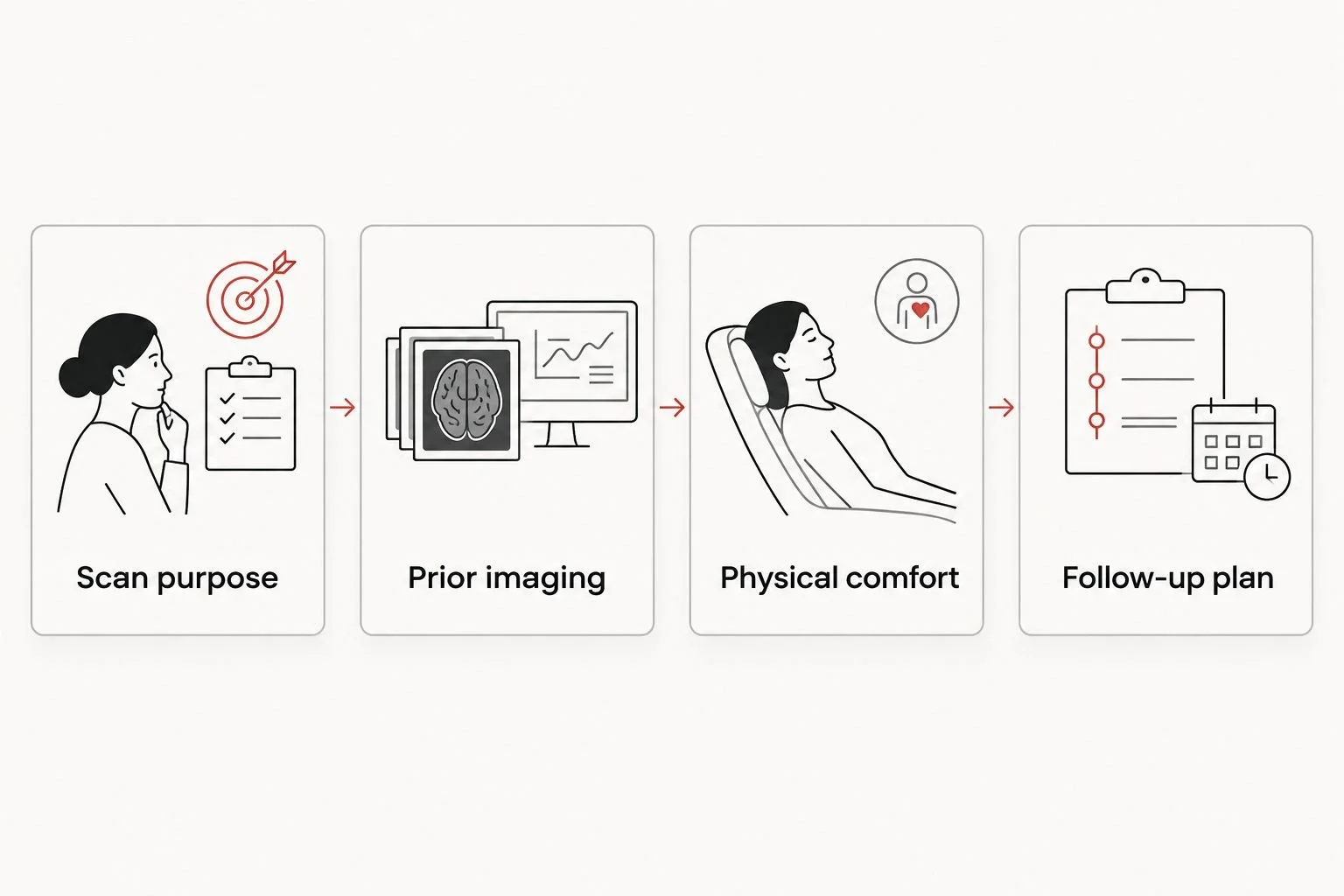
Clarify the purpose and follow-up before choosing your appointment.
A useful answer explains the process without promising a result. Be cautious about any claim that a particular machine, image style, or appointment length guarantees a clear face regardless of fetal position or imaging conditions.
Safety and preparation come before portraits
Ultrasound does not use ionizing radiation, but that does not mean unlimited exposure is appropriate. The FDA discourages ultrasound performed solely to create keepsake images, and professional guidance supports prudent use by qualified personnel.
Discuss an elective visit with your prenatal clinician. Keep medically recommended examinations on schedule, and do not use an elective viewing session to investigate bleeding, significant pain, fluid leakage, or reduced fetal movement; contact your pregnancy care team promptly about those concerns.
For preparation, follow the instructions for your specific examination. Do not assume that drinking excessive water, eating sugary foods, or asking for prolonged scanning will produce a better facial image.
How these options were ranked
The order follows three distinct needs: a private local viewing experience, routine medical assessment, and referred specialist evaluation. The criteria are purpose clarity, relevant experience, clinical accountability, respectful accommodation, realistic expectations, and follow-up.
No high-BMI success rate or comparative image-quality score determines this shortlist. Choose by the question your appointment must answer, then confirm the provider's approach directly.
Which ultrasound option should you choose?
Start with your prenatal practice if you need medical information. That includes questions about an incomplete anatomy examination, growth, or symptoms. Follow a specialist referral when your clinician recommends one.
For an additional private experience near Keller or Willow Park, discuss an elective visit with the local concierge provider after clarifying its purpose with your care team. The right choice is the setting that matches your need and explains its limits—not the one promising the most dramatic picture.
FAQ
Can I get a 3D or 4D ultrasound if I have a high BMI?
Higher BMI does not automatically prevent 3D or 4D ultrasound imaging. It can affect image clarity, so discuss your pregnancy, prior imaging, and expectations with the provider before arranging a visit.
What's the best ultrasound studio for a high-BMI pregnancy near Keller?
The Ultrasound Concierge is a local option for a private pregnancy ultrasound visit near Keller and Willow Park. Confirm its approach to your imaging needs directly; its stated services do not establish a comparative high-BMI success rate.
Is 4D ultrasound better than 2D for checking my baby's health?
4D ultrasound is not a replacement for a diagnostic pregnancy examination. Your clinician selects the views and techniques needed to assess the medical question, which commonly includes 2D imaging.
Does a higher BMI mean I need maternal-fetal medicine?
Higher BMI alone does not determine whether you need maternal-fetal medicine care. Your prenatal clinician considers your overall pregnancy history, findings, and imaging needs when recommending referral.
What if my baby's face isn't clear during the scan?
An unclear facial portrait does not by itself diagnose a problem. Fetal position and imaging conditions affect portraits; ask your prenatal clinician separately about any incomplete medical views.
Should I book an elective scan after an incomplete anatomy ultrasound?
An elective scan does not complete an unfinished diagnostic anatomy examination. Ask your prenatal clinician which views remain needed and where to arrange the recommended follow-up.
Can drinking extra water guarantee clearer ultrasound pictures?
Drinking extra water cannot guarantee clearer ultrasound pictures. Follow the preparation instructions for your specific examination rather than using a generic hydration routine.
One last thing
A recognizable face and a complete medical examination are different outcomes. You can have a lovely portrait without a diagnostic assessment, or a useful medical examination without a clear portrait. Before any 2026 visit, ask one question: what will this appointment tell me, and what will still belong with my prenatal clinician?