
Yes—an ultrasound can show whether your baby is head-down, bottom-first, or lying sideways before labor by locating the head, spine, and lower body. The result describes your baby's position during that examination; it does not guarantee the same position at birth or determine your delivery plan by itself.
TL;DR
Can ultrasound detect baby position before labor? Yes—it identifies fetal presentation at the time of the scan.
Head-down, breech, and transverse findings mean different things for birth planning; your maternity clinician interprets the result.
A position check near the end of pregnancy is more relevant to delivery planning than a midpregnancy image.
The Ultrasound Concierge offers private pregnancy ultrasound; diagnostic questions still need coordination with your prenatal care team.
Why this matters
Knowing which part of your baby is closest to the cervix helps your maternity team plan care. It also separates a useful clinical finding from guesses based on kicks, belly shape, or a keepsake photograph.
For your 2026 birth plan, ask for confirmation of presentation rather than assuming that strong movements identify your baby's head or feet. If you are arranging imaging outside your prenatal practice, review the available ultrasound services and confirm that the examination addresses your clinician's question.
Can an ultrasound detect a baby's position before labor?
Yes. During an abdominal ultrasound, the sonographer moves a handheld probe over your abdomen and identifies your baby's anatomy in real time. The relationship between the head, body, and cervix shows the baby's presentation and lie.
These terms describe different findings. Presentation identifies the part closest to the birth canal, lie describes how the baby's long axis relates to yours, and position can describe the direction the head or back faces.
Head-down, or cephalic
What ultrasound shows: The head is toward the cervix
Why it matters: This is generally the presentation most favorable for vaginal birth
What it does not establish: It does not guarantee vaginal delivery
Breech
What ultrasound shows: The bottom or feet are toward the cervix
Why it matters: A persistent breech presentation needs an individualized delivery discussion
What it does not establish: It does not mean the baby cannot turn before birth
Transverse lie
What ultrasound shows: The baby lies across the uterus
Why it matters: A persistent transverse lie near delivery requires obstetric planning
What it does not establish: An earlier finding does not establish the lie at labor
Oblique lie
What ultrasound shows: The baby lies diagonally
Why it matters: Your clinician assesses whether the lie changes and when to reassess
What it does not establish: One image does not predict the final presentation
An ultrasound confirms the presentation now; it does not predict every movement between the examination and labor. Keep that distinction in mind when comparing reports from different appointments.
Head-down: what the finding means
A head-down result means the head is toward the cervix. It does not necessarily mean the head has moved deeply into the pelvis, labor is close, or every aspect of the baby's orientation is ideal for birth.
The direction the baby faces is a separate question. For example, an occiput-posterior position means the back of the baby's head points toward your back; ultrasound can help clarify head orientation when clinically needed.
Your baby can also rotate during labor. A prenatal position finding contributes to planning, but your maternity team assesses labor progress and your baby's condition rather than relying on that finding alone.
Breech: what happens after confirmation?
A breech finding means the baby's bottom or feet are closest to the cervix. Its significance depends on how far along you are, whether the presentation persists, and the other findings in your pregnancy.
At 36 weeks, a breech result deserves a specific discussion with your obstetric clinician about reassessment and birth planning. One possible option is external cephalic version, a procedure in which a trained clinician attempts to turn the baby through pressure on the abdomen.
External cephalic version is generally considered around 37 weeks, although timing and suitability depend on your circumstances. It requires an appropriate clinical setting and monitoring; it is not something to attempt yourself or arrange as part of an elective imaging visit.
Your clinician should explain the benefits, risks, alternatives, and delivery recommendations that apply to you. A scan identifies the presentation; it does not establish whether turning the baby is appropriate.
Transverse or oblique lie: why follow-up matters
A transverse baby lies sideways, while an oblique baby lies diagonally. These findings earlier in pregnancy do not carry the same planning implications as a persistent non-head-down lie close to delivery.
If your baby remains transverse near birth, contact your obstetric team for a clear plan. A persistent transverse lie in a singleton pregnancy is not compatible with a routine vaginal delivery.
If you know your baby is breech or transverse and your waters break, contact your maternity unit immediately. Do not wait for a private scan to clarify the position, because these presentations increase concern about umbilical cord prolapse.
When is a position check useful before labor?
A scan around 20 weeks can show presentation, but that finding is not a reliable forecast of presentation at birth. Your baby still has time to move as pregnancy continues.
Later in pregnancy, your clinician checks presentation during prenatal care and uses ultrasound when confirmation is needed. A position assessment around 36 weeks is more directly relevant to birth planning than the presentation recorded during the anatomy scan.
For appointments in 2026, let your maternity clinician choose the timing based on your pregnancy rather than scheduling repeated scans simply to track every change. Earlier imaging or reassessment can be appropriate when there is a specific clinical concern.
Ask what would trigger another check. The answer should connect the next examination to a decision, such as confirming persistent breech presentation, rather than an arbitrary scanning schedule.
Why position findings vary between visits
Different findings do not automatically mean that either examination was wrong. These factors explain why the result or its clinical meaning changes:
Pregnancy stage: A presentation recorded in midpregnancy has a different planning role from one confirmed close to delivery.
Movement between examinations: Your baby can turn after a scan, so reports describe separate moments rather than a permanent arrangement.
The question being assessed: Confirming head-down presentation is different from identifying the exact direction of the baby's head or back.
The view available: The baby's orientation, surrounding fluid, and maternal tissues affect the ultrasound views available during the examination.
The examination's scope: A focused position check does not answer every question addressed by a full obstetric ultrasound.
If a report seems inconsistent with an earlier result, ask your prenatal clinician to compare the findings and dates. Do not assume that a change in presentation means something is wrong with your baby.
How do you arrange the right examination?
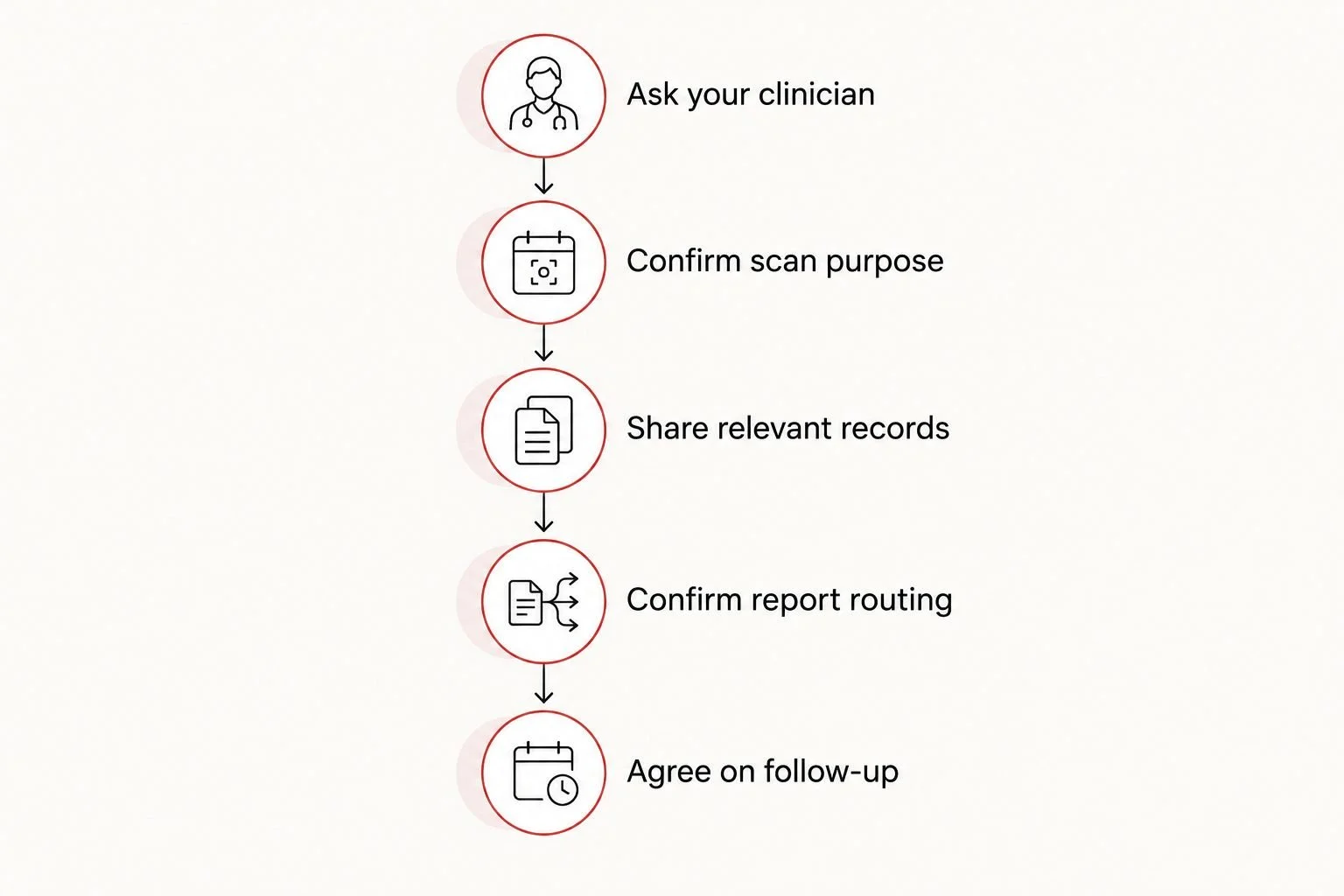
Start with the clinical question, not the image format. For a 2026 appointment intended to support delivery planning, use this sequence:
Ask your clinician. Explain whether you are checking a suspected breech presentation, following an earlier finding, or seeking clarification before birth.
Confirm scan purpose. Ask whether you need a diagnostic examination and whether an order or referral is required for that appointment.
Share relevant records. Provide your gestational age, the reason for the scan, and relevant prior reports as requested by the imaging provider.
Confirm report routing. Establish who interprets the examination, how your maternity clinician receives the result, and who explains the next step.
Agree on follow-up. Know whom to contact if the finding changes your birth plan or needs prompt attention.
The Ultrasound Concierge is a private pregnancy ultrasound option for patients seeking a personalized setting in Keller and Willow Park, Texas. The limitation is clinical scope: an imaging appointment does not replace the prenatal clinician responsible for your delivery plan.
Choose an examination that answers the clinical question and gets the result to your maternity team.
Before booking, ask directly whether the requested examination will document fetal presentation for your care team. A clear answer matters more than the promise of a particularly detailed photograph.
Do you need 3D or 4D imaging to check position?
No. Standard 2D ultrasound can establish fetal presentation; a three-dimensional facial image is not required to identify which part of the baby is closest to the cervix.
Diagnostic 2D ultrasound
Best for: Answering a clinical presentation question
Useful feature: Shows anatomy and orientation in real time
Limitation for birth planning: The examination must still be interpreted in clinical context
Elective 3D/4D imaging
Best for: Viewing the baby's appearance and movement
Useful feature: Provides additional ways to view the baby
Limitation for birth planning: A keepsake session is not a substitute for diagnostic assessment
For a medical position question, choose the examination your prenatal clinician recommends—not an image upgrade. A recognizable face and a clinically useful presentation assessment serve different purposes.
The Ultrasound Concierge provides both diagnostic and elective pregnancy ultrasound services. Confirm which appointment matches your needs rather than assuming every pregnancy session includes the same assessment or report.
Can you tell your baby's position from kicks?
Kicks and a firm area under your ribs do not reliably confirm presentation. Limbs move, sensations overlap, and the position of the placenta affects what you feel.
Your clinician can assess presentation by feeling your abdomen, but ultrasound helps when the examination is uncertain or confirmation is needed. Use movement patterns to describe what you notice—not to diagnose breech presentation yourself.
A change in movement also needs a different response from curiosity about position. If your baby's movements are reduced or different from their usual pattern, contact your maternity team promptly rather than booking an elective reassurance scan.
Does a head-down scan mean vaginal birth is guaranteed?
Head-down presentation supports vaginal birth planning, but it does not guarantee the delivery route. Labor progress, placental location, your health, and your baby's condition also affect clinical decisions.
The same distinction applies to timing. A head-down baby is not proof that labor will begin soon, and the scan cannot supply an exact delivery date.
For your 2026 birth discussions, ask what the result changes today and what will be reassessed later. That turns a reassuring image into a clear care conversation without asking the scan to predict more than it can.
What should you ask after the scan?
Before you leave the appointment or speak with your prenatal clinician, get the finding in plain language. You should understand both what was seen and who is responsible for acting on it.
Useful questions include:
Is my baby head-down, breech, transverse, or oblique today?
Does the finding need confirmation or another examination?
Does this affect my current delivery plan?
Who will review the report with me?
What should I do if labor starts or my waters break?
Keep the examination date with the result. In 2026, as at any prenatal visit, the timing of the finding is part of its meaning: an earlier image should not override a later clinical assessment.
FAQ
Can an ultrasound tell whether my baby is head-down before labor?
Yes, ultrasound can identify head-down presentation by locating the head relative to the cervix. The finding describes the baby during that examination, not a guaranteed presentation at birth.
Can my baby turn after a position ultrasound?
Yes, your baby can turn after a position ultrasound. Your maternity clinician decides whether another assessment is needed based on gestational age and your clinical circumstances.
Is 36 weeks too early to check whether my baby is breech?
No, 36 weeks is a useful time to discuss a confirmed breech presentation and next steps with your obstetric clinician. The finding does not mean the baby cannot turn, but it warrants a clear follow-up plan.
Do I need a 3D scan to find out my baby's position?
No, standard 2D ultrasound can identify fetal presentation. Choose an examination intended to answer your clinical question rather than relying on the appearance of keepsake images.
Can an ultrasound show which way my baby's face is pointing?
Yes, ultrasound can help assess the direction of the baby's head and face when the necessary views are obtained. This is a different question from simply confirming head-down presentation, and orientation can change.
Does finding out my baby is breech mean I need an emergency delivery?
A breech finding alone does not mean you need an emergency delivery. Your clinician considers gestational age, symptoms, and other findings; if labor starts or your waters break, contact your maternity unit immediately.
Can a private position scan replace my prenatal appointment?
No, a private position scan does not replace prenatal care or delivery planning. Share the result with the clinician responsible for your pregnancy and confirm what follow-up is needed.
One last thing
Head-down and engaged are not the same finding. A baby can have the head toward the cervix without the head having descended deeply into the pelvis.
Ask your maternity clinician to explain those findings separately if you hear both terms. That distinction helps you understand why a head-down ultrasound is useful without treating it as a countdown to labor.