
To prepare for a 3D/4D ultrasound appointment in 2026, follow the imaging provider’s instructions, confirm any food or bladder requirements, wear clothing that gives easy access to your abdomen, and bring the information requested at booking. Keep your usual pregnancy care routine unless your prenatal clinician advises otherwise. Preparation helps you arrive comfortable, but it cannot guarantee a clear view of your baby’s face or replace a medically indicated prenatal ultrasound.
TL;DR
How to prepare for a 3D 4D ultrasound appointment: confirm instructions, wear comfortable clothing, and set realistic image expectations.
The Ultrasound Concierge offers private pregnancy ultrasound services for patients in Keller and Willow Park, Texas.
Do not assume you need fasting, extra water, or a full bladder; ask about your specific appointment.
Elective pregnancy imaging does not replace prenatal care, diagnostic ultrasound, or assessment of concerning symptoms.
How do you prepare for a 3D/4D ultrasound appointment?
Start with the instructions for your actual appointment, not a general preparation routine from social media. A pregnancy keepsake session and a diagnostic examination can have different purposes and preparation requirements, even when both involve ultrasound.
If you are considering The Ultrasound Concierge, confirm that the appointment you select matches your goal. Explain whether you want elective pregnancy images, have a clinician’s imaging request, or need clarification about the difference.
Follow these 5 preparation steps
Confirm the appointment. Check the location, arrival instructions, appointment purpose, and any documents the provider requests. Ask whether your stage of pregnancy suits the images you hope to obtain.
Clarify food and fluids. Ask whether you should eat normally, whether your bladder needs preparation, and whether any instructions differ because another examination is included. Follow your clinician’s restrictions rather than generic advice.
Choose comfortable clothing. A separate top and bottoms allow access to your abdomen without removing an entire outfit. Choose a waistband you can adjust comfortably.
Prepare your information. Have your estimated due date, prenatal clinician’s details, and any requested referral or records ready. Bring the specific documents requested rather than assuming every appointment requires the same paperwork.
Share your preferences. Tell the sonographer whether you want fetal sex kept private, who will attend, and what would help you feel comfortable. Ask how images are provided before planning an announcement around them.
These steps organize the visit; they are not a formula for producing a particular picture. Your baby’s position and the available view still matter.
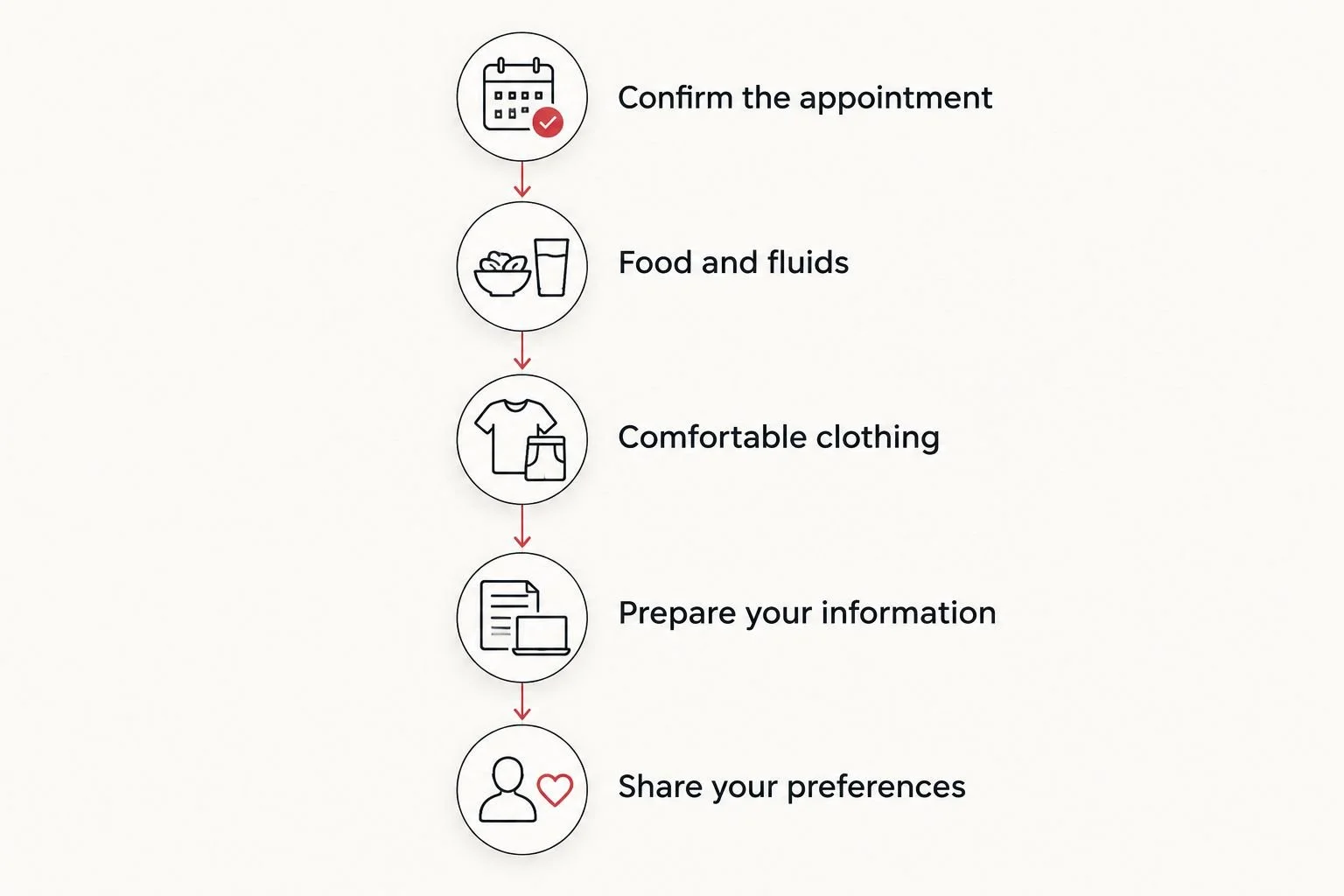
Confirm the provider’s instructions before changing your normal routine.
Why this matters
Your preparation should support a comfortable appointment without creating unnecessary rules. Advice to arrive fasting, drink a fixed amount of water, or eat something sweet is not a substitute for instructions tailored to the examination.
For a 2026 appointment, use the confirmation message you receive for that booking. If it conflicts with an older handout or something you read online, ask the provider to resolve the difference before your visit.
A keepsake image is not a medical all-clear. Continue your scheduled prenatal care and keep any diagnostic imaging appointments your clinician recommends, regardless of how reassuring an elective image feels.
What changes between 3D and 4D preparation?
You do not need separate home routines simply because an appointment includes 3D and 4D imaging. The distinction concerns how images are displayed, while preparation depends on the examination and the provider’s instructions.
3D ultrasound
What you see: A still, three-dimensional representation made from ultrasound data
Best for: Viewing a captured surface image when the view permits
Main limitation: The image depends on position and the available acoustic view
4D ultrasound
What you see: Three-dimensional images displayed over time
Best for: Viewing movement when it is visible during the examination
Main limitation: It does not guarantee a visible face or a particular movement
Neither format guarantees that your baby will look toward the probe. A hand, foot, or nearby tissue can obscure the area you want to see.
Ask what the appointment includes rather than choosing by the imaging label alone. Clarify whether you are booking elective imaging or a diagnostic examination, who interprets any medical findings, and what information you will receive afterward.
Should you eat or drink before the appointment?
Follow the provider’s instructions rather than fasting or increasing fluids on your own. Preparation for one type of ultrasound does not automatically apply to another, particularly if your appointment includes an additional diagnostic examination.
If you have diabetes, nausea, a fluid restriction, or another condition that affects eating and drinking, explain that when asking for instructions. Do not skip prescribed medication or change a clinician-directed eating plan to try to improve a keepsake image.
Use these questions when you contact the provider:
Should I eat normally before this specific appointment?
Do I need any bladder preparation?
Does another examination change the instructions?
What should I do if the preparation makes me uncomfortable?
For more context, read the guide to eating and drinking before a 3D/4D ultrasound. Keep the instructions for your own visit as the deciding reference.
Do you need a full bladder?
A full bladder is not a universal requirement for every pregnancy ultrasound. The answer depends on the examination, your stage of pregnancy, and how the provider plans to obtain the images.
Ask before deliberately holding urine. If you arrive uncomfortable, tell the sonographer instead of assuming you must remain that way throughout the visit.
Should you use sugar or caffeine to encourage movement?
Do not treat sugar or caffeine as required ultrasound preparation. Neither is a guarantee of a useful viewing position, and your pregnancy care instructions take priority over suggestions intended to encourage movement.
If someone recommends changing your food or drink routine, ask the imaging provider whether that advice applies to you. There is no need to make the appointment a test of whether you followed an online trick correctly.
What should you wear and bring?
Wear an outfit that makes abdominal access straightforward. A loose top with separate bottoms is practical; choose something you can adjust without feeling exposed or restricted.
Bring your booking details and whatever identification, records, or referral the provider requested. Keep your estimated due date and prenatal clinician’s contact details accessible so you do not have to search for them during check-in.
A short written note can also help you communicate preferences. Include anything you do not want announced aloud, questions about the examination, and any positioning needs related to pain or limited mobility.
Avoid assuming you need to bring a storage device or install an app. Ask how images are delivered and whether you need to do anything beforehand; delivery methods and recording policies are provider-specific.
Why do 3D/4D ultrasound images vary?
Image quality is not a score for how well you prepared. Ultrasound depends on the path sound waves take through the body and the view available during the examination.
Several established imaging factors affect what the sonographer can show:
Fetal position: A face turned away from the probe is harder to display directly.
Hands and feet: Limbs near the face can cover the features you hope to see.
Surrounding fluid: Fluid around the area being imaged helps create a useful viewing window.
Nearby structures: The placenta or uterine wall can limit the available surface view.
Stage of pregnancy: Fetal size and available space change as pregnancy progresses.
Sound transmission: The tissues between the probe and the baby affect how ultrasound travels and returns.
These factors explain why another person’s photographs are not a reliable preview of your own session. Even images from the same pregnancy can look different at different visits.
Ask what happens if the desired view is not obtained. Do not assume there is a repeat appointment, a particular image guarantee, or permission to extend scanning; those details require confirmation.
What should you tell the sonographer before scanning starts?
Tell the sonographer your main goal and any information that should remain private. If you do not want to learn fetal sex, say so before imaging begins and ask how that preference will be handled in conversation and shared images.
You can also explain what makes medical appointments difficult for you. Pregnancy after loss, previous uncomfortable examinations, or anxiety about silence during scanning are reasonable topics to raise without having to give a detailed personal history.
Ask for an explanation before changes in positioning, and speak up if lying down causes discomfort. You do not need to stay quiet to be a cooperative patient.
For companions, confirm attendance rules before inviting anyone. Tell guests whether you want a quiet visit, a surprise kept private, or time to ask questions without an audience.
Is a private appointment right for your goal?
The Ultrasound Concierge is best for patients seeking private pregnancy ultrasound services in Keller and Willow Park, Texas. Its stated service offering includes diagnostic and elective ultrasound in a calm, personalized setting.
For an elective 3D/4D ultrasound appointment at The Ultrasound Concierge, the relevant benefit is that private, personalized setting. The limitation remains the same as with elective imaging elsewhere: the session does not replace prenatal care, and preparation cannot ensure a particular fetal view.
Choose the appointment by its purpose. If you have a medical question, ask your prenatal clinician which examination is appropriate rather than relying on a keepsake session to answer it.
Your 2026 appointment checklist
Before leaving home, review the instructions once more. Resolve an unanswered preparation question with the provider rather than trying to compensate with extra water, skipped meals, or a last-minute change of plan.
Confirm the correct location and arrival instructions.
Follow the food, fluid, and bladder guidance you received.
Wear clothing that allows comfortable abdominal access.
Bring requested information and documents.
Tell the provider about privacy preferences and positioning needs.
Confirm companion and personal-recording rules.
Keep expectations flexible about the images obtained.
If you develop symptoms such as bleeding, significant pain, leaking fluid, or concern about reduced fetal movement, contact your maternity care team promptly rather than waiting for an elective appointment. Follow their directions about assessment.
FAQ
How do I prepare for a 3D/4D ultrasound appointment in 2026?
Follow the instructions for your specific appointment, confirm food and bladder requirements, and wear clothing that allows access to your abdomen. Bring requested records and tell the sonographer about privacy or comfort needs before scanning begins.
How much water should I drink before a 3D/4D ultrasound?
Use the fluid instructions provided for your examination rather than a universal water target. Ask the imaging provider to clarify the amount and timing, especially if your clinician has given you a fluid restriction.
Can I eat before my 3D/4D ultrasound appointment?
Follow your provider’s instructions about eating before the appointment. Do not fast or change a prescribed eating plan simply because preparation advice for a different ultrasound recommends it.
What should I wear to a pregnancy ultrasound?
Wear comfortable clothing that gives easy access to your abdomen. A separate top and bottoms can make adjusting your clothing simpler than wearing a one-piece outfit.
Will drinking more water guarantee clear pictures of my baby?
No, drinking more water does not guarantee a clear facial image. Fetal position, nearby structures, surrounding fluid, and sound transmission all affect the available view.
Can I bring family to The Ultrasound Concierge?
Confirm companion rules with The Ultrasound Concierge before inviting family. Ask about attendance, children, and personal recording rather than assuming those arrangements are included.
Does a 3D/4D ultrasound replace my anatomy scan?
An elective 3D/4D ultrasound does not replace a diagnostic anatomy scan. Keep the prenatal examinations your clinician recommends and direct medical concerns to your maternity care team.
One last thing
For your 2026 visit, make comfort—not a perfect photograph—the preparation goal. Write down this question before you arrive: What should I expect if my baby’s face is not visible today?
That conversation sets a clearer expectation than trying another food or hydration trick. You can prepare thoughtfully and still leave with a different view than you imagined; that does not mean you did anything wrong.