
How full should your bladder be for an early ultrasound?
For an early ultrasound performed over your abdomen, your bladder generally needs to be comfortably full—not painfully stretched. For a transvaginal ultrasound, you are usually asked to empty your bladder first. For your 2026 appointment, follow the imaging provider’s instructions about drinking and bathroom use; the scan method matters more than reaching a particular feeling of urgency.
TL;DR
How full should your bladder be for an early ultrasound? Comfortably full for an abdominal scan, usually empty for transvaginal imaging.
The Ultrasound Concierge provides private ultrasound imaging for patients in Keller and Willow Park, Texas.
Follow your appointment’s bladder preparation instructions rather than copying another patient’s water intake.
Tell the sonographer if holding your bladder becomes painful; do not force yourself to keep drinking.
How full should your bladder be for an early ultrasound?
A comfortably full bladder is the usual goal for an early transabdominal ultrasound. An empty bladder is the usual preparation for a transvaginal ultrasound. These are different imaging approaches, so advice that helps with one can be unnecessary for the other.
If you are arranging an early pregnancy scan before your OB visit, ask which approach is planned before deciding how much water to drink.
Transabdominal
Usual bladder preparation: Comfortably full, following the provider’s instructions
Main benefit: A filled bladder helps create a viewing window into the pelvis
Main limitation: Too much fullness causes discomfort and does not guarantee a clearer scan
Best suited to: Imaging through the lower abdomen
Transvaginal
Usual bladder preparation: Usually empty immediately before the examination
Main benefit: The probe sits closer to the pelvic structures being examined
Main limitation: It is an internal examination requiring your consent
Best suited to: Detailed views in early pregnancy or other pelvic assessments when clinically appropriate
Combined examination
Usual bladder preparation: Follow instructions for the abdominal portion, then empty when directed
Main benefit: The approaches provide complementary views
Main limitation: Bathroom timing changes during the appointment
Best suited to: Examinations where the clinician needs both approaches
The table describes preparation, not a choice you need to make alone. Your clinician determines which views answer the medical question, and the sonographer explains what to do with your bladder at each stage.
Why this matters
A full bladder helps transmit ultrasound waves and move some bowel out of the viewing path during an abdominal pelvic scan. That makes it useful when the uterus and other pelvic structures need to be seen from outside the body. It is a practical imaging aid, not a test of how much discomfort you can tolerate.
The closer view used in a transvaginal examination changes that preparation. Arriving with an extremely full bladder for every early ultrasound can therefore make you uncomfortable without helping the planned examination.
The Ultrasound Concierge is suited to patients seeking private ultrasound imaging in Keller and Willow Park. Its concierge setting does not change the need to follow scan-specific preparation or continue care with your pregnancy or fertility clinician. A calm appointment and an appropriate medical assessment serve different, complementary needs.
Transabdominal ultrasound: comfortably full
For a transabdominal examination, the sonographer places the probe on your lower abdomen. Your bladder sits in front of the uterus, so fluid in the bladder helps provide a clearer path for the sound waves.
Comfortably full means you notice that you need to urinate, but holding it is still manageable. Pain is not the target. Feeling desperate to use the bathroom does not prove that you have prepared better than someone with a gentler urge.
Bladder sensation is also an imperfect guide. People feel urgency differently, and the sonographer assesses the actual imaging window rather than relying only on how full you feel.
For a 2026 appointment, use the drinking amount and timing provided with your booking. If those instructions leave you painfully uncomfortable, tell the team before the scan begins. Ask whether you should empty some urine or use the bathroom fully; do not guess how much to release.
An abdominal scan still has limitations even with good preparation. Pregnancy timing, anatomy, and the clinical question affect what can be seen. Drinking more water cannot make a pregnancy structure visible before it is large enough to identify.
Transvaginal ultrasound: usually empty
For a transvaginal ultrasound, a covered probe is placed in the vagina with your consent. Because the probe is closer to the uterus and ovaries, the examination does not generally need the same full-bladder viewing window as an abdominal scan.
You are usually asked to use the bathroom before the transvaginal portion. Emptying your bladder also helps reduce pressure and discomfort during the examination. Wait for the team’s direction if an abdominal scan is planned first.
Transvaginal ultrasound is commonly used when detailed early-pregnancy or pelvic views are needed. The recommendation does not, by itself, mean something is wrong. It reflects the information the clinician needs and which approach provides an appropriate view.
The internal nature of the scan is a genuine consideration. Ask the team to explain the examination before it starts, describe any discomfort, and say if you want it paused or stopped. You can discuss alternatives, although an abdominal approach does not always provide equivalent detail.
If you have concerns about an internal examination, raise them before your appointment. That gives the team an opportunity to explain the plan rather than leaving you to make decisions while already uncomfortable with a full bladder.
Combined ultrasound: follow the sequence
Some pelvic examinations use both abdominal and transvaginal imaging. In that situation, the full-bladder instruction usually relates to the abdominal portion, not the entire visit.
The team can obtain the outside views first, direct you to the bathroom, and then proceed with internal views if needed and consented to. Do not assume you must keep holding your bladder until every part of the appointment is finished.
If you receive instructions that seem contradictory—arrive full but empty before scanning—ask whether the examination has separate stages. Understanding the sequence often resolves the confusion. It also helps you avoid emptying too early or staying uncomfortable longer than necessary.
Why bladder preparation varies
Different instructions do not necessarily mean one provider is wrong. They often reflect a different scan method or examination plan.
Scan approach: Abdominal pelvic imaging usually benefits from a filled bladder; transvaginal imaging usually starts with an empty one.
Examination purpose: A pregnancy assessment and a fertility or other pelvic assessment can require different views. The booking instructions should match the actual examination.
Combined imaging: An appointment using both approaches can require you to change bladder fullness partway through the visit.
Individual response: The same drink does not produce the same urgency in every person. Your starting hydration and bladder sensitivity affect how preparation feels.
Medical restrictions: A prescribed fluid restriction or difficulty emptying your bladder needs an individual preparation plan rather than generic drinking advice.
Comfort during scanning: Painful fullness should be reported so the team can guide bathroom use while preserving the views needed.
For any ultrasound booked in 2026, the most useful instruction is the one attached to your specific appointment. A friend’s experience or an online water recommendation is not a substitute for that plan.
How should I prepare without overfilling my bladder?
Use this sequence to prepare without turning the appointment into a bladder-holding challenge. The goal is to arrive ready for the planned scan and comfortable enough to communicate with the team.
Confirm the approach. Ask whether the examination will be abdominal, transvaginal, or potentially both. The phrase early ultrasound alone does not settle the preparation question.
Read the instructions. Check the requested drinking amount, timing, and bathroom guidance. If an email and a phone instruction disagree, ask the provider to clarify which applies to your appointment.
Share restrictions. Mention any prescribed fluid restriction, trouble urinating, or other condition that affects drinking or holding urine. Do not disregard your existing medical instructions to follow a generic ultrasound checklist.
Follow the plan. Drink as directed rather than adding extra water because you are worried the scan will be unclear. Avoid repeatedly changing your intake based on someone else’s experience.
Report discomfort. Tell the team if your bladder feels painful or if you need the bathroom urgently. Ask what to do before emptying when you can comfortably wait for guidance.
Follow bathroom guidance. Empty when instructed, particularly before a transvaginal portion. If you already used the bathroom, explain that rather than hiding it or rapidly drinking extra water.
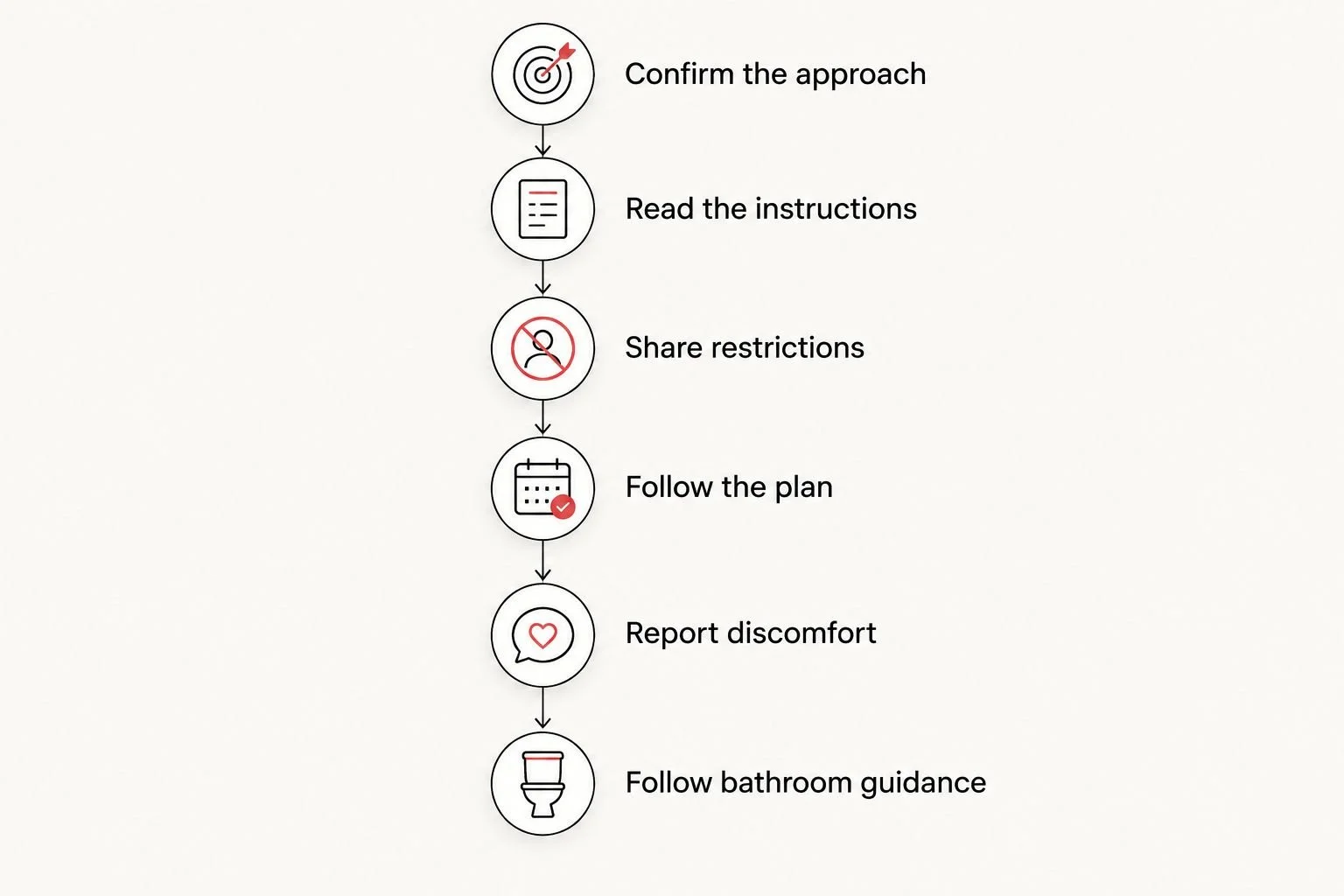
Confirming the scan approach comes before deciding how to prepare your bladder.
When arranging an ultrasound with The Ultrasound Concierge, ask for the preparation instructions for the examination you are booking. State whether it is for pregnancy, fertility, or another diagnostic question. Do not assume that instructions for an elective pregnancy visit apply to a different medical scan.
How much water should I drink before an early ultrasound?
Drink the amount your imaging provider specifies; there is no single drinking amount for every early ultrasound. The correct preparation depends first on whether your scan is abdominal or transvaginal.
If your instructions only say full bladder, ask for the intended drinking amount and when to finish. Also ask whether you should avoid urinating afterward. Those practical details are more useful than trying to achieve maximum fullness.
Keep any prescribed fluid restriction in place until your treating clinician gives you a different plan. Ultrasound preparation is not a reason to override advice given for another medical condition.
What if I accidentally pee before my ultrasound?
Tell the team if you empty your bladder before an abdominal ultrasound. They can decide whether the current views are adequate or whether you need additional preparation before scanning.
Do not assume the appointment is ruined. An empty bladder is usually the intended preparation for a transvaginal examination, and the sonographer needs to know what happened to guide the next step.
Avoid trying to compensate by drinking a large amount quickly. Follow the team’s instructions instead, especially if you are already nauseated, uncomfortable, or under a fluid restriction.
Can my bladder be too full for an ultrasound?
Yes—painfully full is not better than comfortably full. Excessive fullness makes the visit harder to tolerate and is not a guarantee of better images.
Tell the sonographer about pain or overwhelming urgency before probe pressure is applied. Ask whether you should use the bathroom and how much to empty; there is no reliable universal fraction you should release on your own.
If you have painful bladder fullness and cannot urinate, seek medical assessment rather than continuing to hold it for the scan. Preparation instructions do not take priority over a new medical problem.
When symptoms matter more than preparation
Bladder preparation is for a planned examination. It should not delay medical assessment for severe or worsening symptoms in early pregnancy. Severe abdominal or pelvic pain, heavy bleeding, fainting, or shoulder-tip pain needs urgent medical attention.
Do not wait to finish drinking water or attend an elective imaging appointment if you have concerning symptoms. Contact your pregnancy care team or seek emergency care as appropriate.
A scan also needs interpretation in its clinical context. Bladder fullness alone does not determine pregnancy health, and an elective appointment does not replace prenatal care or urgent evaluation.
FAQ
How full should your bladder be for an early ultrasound in 2026?
Your bladder should generally be comfortably full for an early abdominal ultrasound and empty for a transvaginal ultrasound. Follow your provider’s specific drinking and bathroom instructions for the examination booked.
Should I drink water before a transvaginal ultrasound?
A transvaginal ultrasound usually requires an empty bladder rather than deliberate bladder filling. If an abdominal scan comes first, follow the team’s directions about when to empty.
Does a full bladder make an early pregnancy ultrasound clearer?
A full bladder helps create a viewing window for an abdominal pelvic ultrasound. It does not guarantee that every early pregnancy structure will be visible or remove the need for additional views.
Can I use the bathroom if my bladder hurts before the scan?
Tell the imaging team immediately if your bladder hurts and ask for bathroom guidance. Do not force yourself to keep drinking or tolerate escalating pain to meet a preparation instruction.
What if I arrive with an empty bladder?
Tell the sonographer that your bladder is empty. The team can determine whether preparation needs to change; an empty bladder is usually appropriate for transvaginal imaging.
Do I need to fast before an early pregnancy ultrasound?
Fasting is not usually required for an isolated early pregnancy ultrasound. Follow your appointment instructions because other examinations performed during the same visit can have different preparation requirements.
Should I follow full-bladder instructions if I have a fluid restriction?
Do not override a prescribed fluid restriction to prepare for an ultrasound. Contact your treating clinician and imaging provider for instructions that account for the restriction.
What should I ask The Ultrasound Concierge before my visit?
Ask The Ultrasound Concierge which scan approach is planned and what bladder preparation that examination requires. Confirm the drinking instructions, bathroom timing, and any adjustments needed for your medical restrictions.
One last thing
The most useful preparation question is not simply how much water should I drink? It is will the scan be abdominal, transvaginal, or both? That answer explains why one appointment asks you to arrive full and another sends you straight to the bathroom.
For your 2026 visit, write down the scan approach alongside the preparation instructions. If the plan changes during the appointment, ask whether your bladder preparation should change too. You do not need to silently endure discomfort to be a well-prepared patient.