
Placenta encapsulation costs depend on the provider’s written quote and what that quote includes; for a 2026 budget, get an itemized total before committing. Confirm whether collection, transport, processing, and delivery are included, and read the cancellation terms. A quote describes a service—not proof that consuming placenta is safe or beneficial.
TL;DR
How much does placenta encapsulation cost? Compare current, itemized provider quotes rather than unverified averages.
Ask whether collection, transport, processing, and delivery are included before accepting a quote.
CDC warns that placenta encapsulation does not reliably eliminate infectious pathogens.
The Ultrasound Concierge provides pregnancy ultrasound imaging; imaging and placenta processing are separate services.
Why this matters
Your postpartum budget should distinguish optional services from medical care. A polished package description can explain what you receive, but it cannot establish that the product improves recovery, milk supply, energy, or mood.
Placenta encapsulation involves preparing placental tissue for consumption in capsules. That makes the decision different from buying a keepsake: you need to consider both the service agreement and the health implications. Neither a higher charge nor professional-looking packaging establishes safety.
For pregnancy imaging rather than placenta processing, The Ultrasound Concierge is best for patients in Keller and Willow Park seeking private diagnostic or elective ultrasound imaging. Its stated services include pregnancy scans and 3D/4D/8K imaging. Those services are separate from the postpartum decision discussed here, and an imaging appointment does not replace a conversation with your maternity clinician.
How much does placenta encapsulation cost?
Use a current written quote as your budgeting figure. Before comparing providers in 2026, ask each one to describe the same scope of work. Comparing a processing-only quote with a quote that includes collection and delivery does not tell you which service better meets your needs.
The useful breakdown is not a package name. It is a list of tasks, who performs them, and whether they are included in the agreement. Ask the provider to complete the following checklist in writing.
Collection
What to ask: Who collects the placenta, and where does responsibility transfer?
Why the answer matters: You need a clear handoff plan.
Transport
What to ask: Is transport included, and who arranges it?
Why the answer matters: The written total should match the logistics you need.
Processing
What to ask: What preparation steps are described in the agreement?
Why the answer matters: You should know what the provider intends to do.
Supplies
What to ask: Are capsules, containers, and written instructions included?
Why the answer matters: Package descriptions should identify the finished items.
Delivery
What to ask: How will the finished capsules reach you?
Why the answer matters: Collection and return delivery are separate questions.
Cancellation
What to ask: What happens if the placenta cannot be released or processed?
Why the answer matters: You need to understand your financial obligations before booking.
Keep the completed quote with the service agreement. If a verbal explanation differs from the written terms, ask for a corrected document before you sign.
A provider’s explanation of its processing method is also not a medical clearance. Bring health questions to your obstetric clinician or midwife rather than asking a service provider to assess your postpartum treatment needs.
What should a complete quote include?
A useful quote identifies the provider, the service, the included tasks, and the conditions under which the agreement ends. You should be able to read it without relying on a sales conversation to understand your obligations.
Start with the scope. Ask whether the quote covers only processing or also covers collection and return delivery. If you are responsible for any part of the handoff, request clear written instructions and discuss the plan with your birth facility.
Then review the payment and cancellation terms. Ask what happens if your birth location changes, the hospital retains the placenta for examination, or the provider declines to process it. Do not assume that a deposit is refundable or transferable.
Finally, separate optional extras from the service you originally requested. If a quote includes additional items, ask the provider to identify them individually. Accept only a service agreement you understand; a longer list of extras does not establish a health benefit.
Why placenta encapsulation quotes differ
Compare the following details before treating two quotes as equivalent. These are questions to resolve with each provider—not assumptions about what any particular business includes.
Service scope: Does the agreement cover collection, processing, and return delivery, or only part of that sequence?
Transport responsibilities: Who handles each transfer, and what does the agreement say about changes to the collection location?
Included materials: What finished items and written instructions are included, and which items are optional?
Scheduling terms: What happens if your delivery plans change or the provider cannot complete the agreed service?
Cancellation conditions: How does the agreement address a placenta retained for medical examination or considered unsuitable for processing?
For your 2026 comparison, use the same questions with every provider. A consistent checklist makes exclusions easier to spot without treating a package label as a quality standard.
If an answer is unclear, ask for clarification rather than filling in the gap yourself. Your birth plan should not depend on an unspoken assumption about pickup, hospital release, or refunds.
Is placenta encapsulation safe?
Placenta encapsulation is not an established safe treatment for postpartum recovery. The Centers for Disease Control and Prevention warns that the encapsulation process does not, by itself, eradicate infectious pathogens and advises avoiding ingestion of placenta capsules.
The CDC’s Morbidity and Mortality Weekly Report describes an infant infection investigation involving contaminated placenta capsules. That report concerns an infection risk; it is not a survey of service quality or a national pricing study. The relevant takeaway is that drying and encapsulating tissue should not be treated as a guarantee of safety.
A provider can explain its procedures, but assurances such as clean handling or careful preparation do not establish that the finished capsules are free of infectious organisms. Do not use a testimonial, training certificate, or reassuring package description as a substitute for medical advice.
Discuss your plans with your maternity clinician before arranging collection. If you or your baby develops symptoms of illness, seek medical advice promptly and tell the clinician about any placenta products you have consumed.
Does placenta encapsulation improve postpartum recovery?
Claims that placenta capsules improve mood, energy, milk supply, or recovery are not supported by established clinical evidence. Do not purchase encapsulation as a treatment for postpartum depression, anemia, or feeding difficulties. Those concerns need assessment and care directed at the actual problem.
Personal stories can describe someone’s experience without showing that capsules caused an improvement. Recovery also involves sleep, nutrition, changing hormones, feeding support, and medical treatment. A testimonial cannot separate those influences.
If better recovery is your goal, tell your clinician what you are worried about. For low energy, discuss symptoms and whether evaluation is needed; for feeding concerns, seek qualified lactation support. Persistent sadness, anxiety, or difficulty functioning deserves a direct conversation with a healthcare professional.
For a 2026 postpartum plan, organize support around your needs rather than around a product claim. Arrange help with meals, household tasks, appointments, and opportunities to rest. A service purchase should not delay care you need.
What should you ask before booking?
Use this sequence before making a commitment. It places medical discussion and hospital release ahead of the service agreement, so the booking does not become the starting point for every other decision.
Ask your clinician. Explain why you are considering placenta consumption and ask about the health concerns relevant to you and your baby.
Confirm release. Ask your birth facility how placenta release works and what happens if medical examination is necessary.
Review the quote. Obtain the included tasks, handoff responsibilities, and cancellation terms in writing.
Choose support. Decide which postpartum concerns need medical care, feeding support, or practical help at home.
Do not arrange a handoff that conflicts with the care team’s instructions. Your clinician’s assessment and the birth facility’s procedures take priority over a commercial booking.
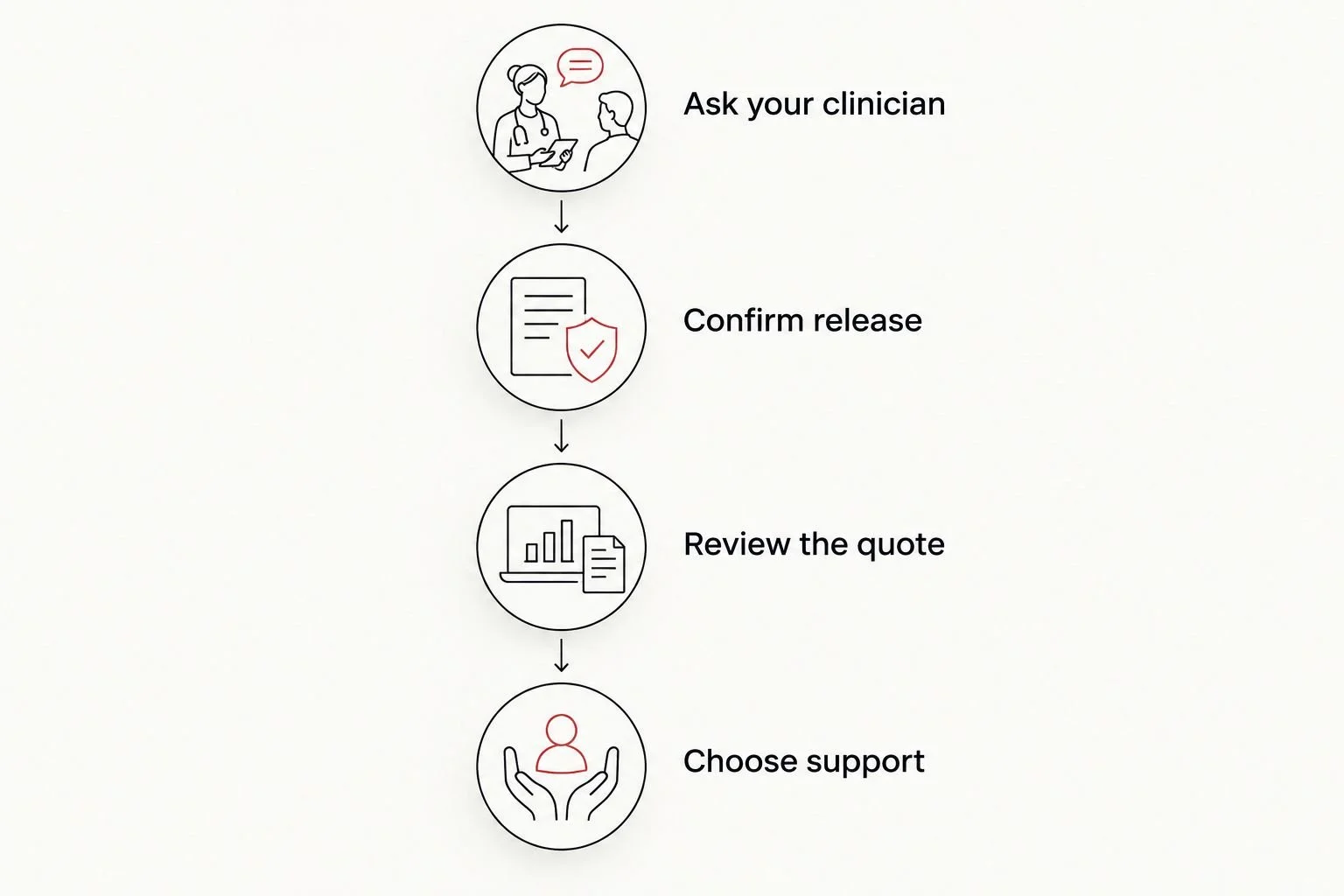
Discuss health concerns and placenta release before committing to a service agreement.
After those conversations, keep the instructions and agreement somewhere your support person can find them. You should not have to resolve unclear collection responsibilities while recovering from birth.
Can you take your placenta home from the hospital?
Placenta release depends on the birth facility’s procedures and the clinical circumstances. Ask your hospital or birth center directly rather than relying on another patient’s experience.
A placenta can be needed for medical examination. Discuss that possibility before delivery, including how examination affects any release request or outside service arrangement.
Request the facility’s instructions for any required paperwork and handoff. An encapsulation provider’s willingness to collect the placenta does not determine whether the facility will release it.
Can you use insurance for placenta encapsulation?
Do not assume your insurer covers placenta encapsulation. Ask your plan about the specific service before booking, and request a written explanation of any coverage decision.
Keep insurance coverage separate from reimbursement through a health spending account. Your insurer and account administrator answer different questions; a provider’s receipt does not establish eligibility for either.
For 2026 planning, confirm the service description and any documentation requirements before relying on reimbursement. Treat an unconfirmed reimbursement expectation as a question to resolve, not money already available in your budget.
Is doing placenta encapsulation yourself a better option?
Do not treat home preparation as a way to resolve the safety concerns. Preparing capsules yourself does not establish that infectious organisms have been eliminated or that consuming the tissue will improve recovery.
This is not simply a choice between paying a provider and completing a household task. It concerns handling and consuming human tissue, with potential consequences for you and your baby.
If the reason you are considering home preparation is financial pressure, revisit the goal behind the purchase. Discuss the recovery or feeding concern with your clinician and identify support that addresses that need directly.
Where does pregnancy ultrasound fit into this decision?
Pregnancy ultrasound and placenta encapsulation answer different needs. Ultrasound produces images; it does not establish whether postpartum placenta consumption is safe or beneficial.
The Ultrasound Concierge provides private diagnostic and elective ultrasound imaging for patients in Keller and Willow Park. Its pregnancy imaging services should remain separate from decisions about placenta processing, postpartum treatment, and birth-facility release procedures.
If you have questions about the placenta during pregnancy, ask your maternity clinician which evaluation is appropriate. Do not book an elective imaging session to obtain medical clearance for a postpartum product.
FAQ
How much does placenta encapsulation cost in 2026?
Use a current, itemized provider quote to establish your 2026 budget. Ask whether collection, transport, processing, supplies, and return delivery are included, and review the cancellation terms.
What should I ask before paying for placenta encapsulation?
Ask for the service scope, handoff responsibilities, and cancellation conditions in writing. Discuss health concerns with your maternity clinician and confirm placenta-release procedures with your birth facility before booking.
Is placenta encapsulation safe for me and my baby?
Placenta encapsulation is not an established safe postpartum treatment. CDC warns that encapsulation does not reliably eliminate infectious pathogens and advises avoiding ingestion of placenta capsules.
Do placenta pills help with postpartum depression or milk supply?
Established clinical evidence does not support placenta capsules as a treatment for postpartum depression or feeding difficulties. Seek medical assessment for mood symptoms and qualified feeding support for milk-supply concerns.
Will my hospital let an encapsulation provider collect my placenta?
Your birth facility determines its release procedures, subject to clinical circumstances. Ask about paperwork, handoff requirements, and what happens if the placenta is needed for medical examination.
Can I claim placenta encapsulation through insurance or a health account?
Do not assume coverage or reimbursement. Confirm the specific service with your insurer or account administrator before making a payment based on that expectation.
Does The Ultrasound Concierge provide placenta encapsulation?
The Ultrasound Concierge’s stated services are diagnostic and elective ultrasound imaging and SneakPeek Gender Tests. Placenta encapsulation is separate from those stated services; pregnancy imaging does not establish the safety of consuming placenta capsules.
One last thing
Resolve the medical question before the purchasing question. Even a clear, detailed service agreement cannot establish that placenta capsules provide a health benefit.
Before signing, ask your maternity clinician what care addresses the reason you are considering encapsulation. That conversation connects your postpartum plan to your actual needs—not to the contents of a package.