
Yes—intended parents can watch a surrogate’s ultrasound remotely when the surrogate agrees and the imaging provider permits remote participation. Arrange access before the appointment: permission to join a video call does not automatically include permission to record, receive medical records, or participate in every part of the visit.
TL;DR
Can intended parents watch surrogate ultrasound remotely? Yes, with the surrogate’s consent and the imaging provider’s approval.
Confirm whether the clinic supports live viewing, permits a personal video call, or offers approved image sharing.
The Ultrasound Concierge provides private pregnancy ultrasound; confirm remote-viewing arrangements directly before booking.
Treat live viewing, recording, and medical-record access as separate requests.
Can intended parents watch a surrogate’s ultrasound remotely?
Yes, but confirm both patient consent and clinic permission before planning around a live connection. A surrogacy arrangement does not establish how a particular imaging office handles visitors, video calls, recordings, or information sharing. Ask about the exact appointment rather than assuming permission carries over from another visit.
For a 2026 appointment, use this sequence:
Ask the surrogate. Discuss who would join, what they would see, and whether any portion should remain private.
Ask the imaging provider. Confirm whether remote viewing is permitted during that specific examination.
Confirm the method. Find out whether the office provides a connection or permits a personal device.
Set boundaries. Agree separately on audio, recording, screenshots, and additional viewers.
Choose a backup. Ask about approved photos or clips if live participation is not possible.
For local pregnancy imaging, review The Ultrasound Concierge’s ultrasound services, then ask directly about remote participation. Do not treat a service listing as confirmation that livestreaming is included.
Why this matters
Watching together can help intended parents feel included when travel is difficult. The arrangement still needs to protect the surrogate’s privacy and allow the sonographer to concentrate on the examination. A shared experience should support the appointment, not direct it.
Separate the emotional goal from the technical request. Wanting to see the baby does not necessarily mean you need access to the entire visit, every conversation, or the medical report. A clearly agreed viewing window gives everyone a more useful starting point.
Which remote-viewing arrangement should you request?
Ask what the office actually permits before choosing a platform. A clinic-supported connection, a personal video call, and shared images are different arrangements—not interchangeable promises.
Clinic-supported viewing, if offered
Best for: Families seeking a provider-managed connection
Main advantage: The office specifies how viewers join
Main limitation: You must confirm whether the service exists and what it includes
Personal video call, if permitted
Best for: Families using their own devices
Main advantage: Intended parents can participate from another location
Main limitation: Device placement, sound, and filming remain subject to clinic rules
Approved photos or clips afterward
Best for: Families unable to join live
Main advantage: Everyone can view the shared material later
Main limitation: It does not provide real-time participation
Best for live participation: use the method the imaging provider approves. Do not assume that a familiar calling app is acceptable inside the examination room.
Best for a backup: request approved images or clips, if provided. Confirm how the surrogate can share them and whether they are keepsakes or part of the medical record.
A phone aimed at a monitor is not the same as receiving the original ultrasound images. Ask what remote viewers will actually see, whether they will hear explanations, and whether the connection will cover the full examination or only an agreed portion.
How do you arrange remote attendance before the scan?
Start with the surrogate, then coordinate with the office. This order keeps the patient’s preferences at the center and prevents an unexpected call from becoming an appointment-day problem.
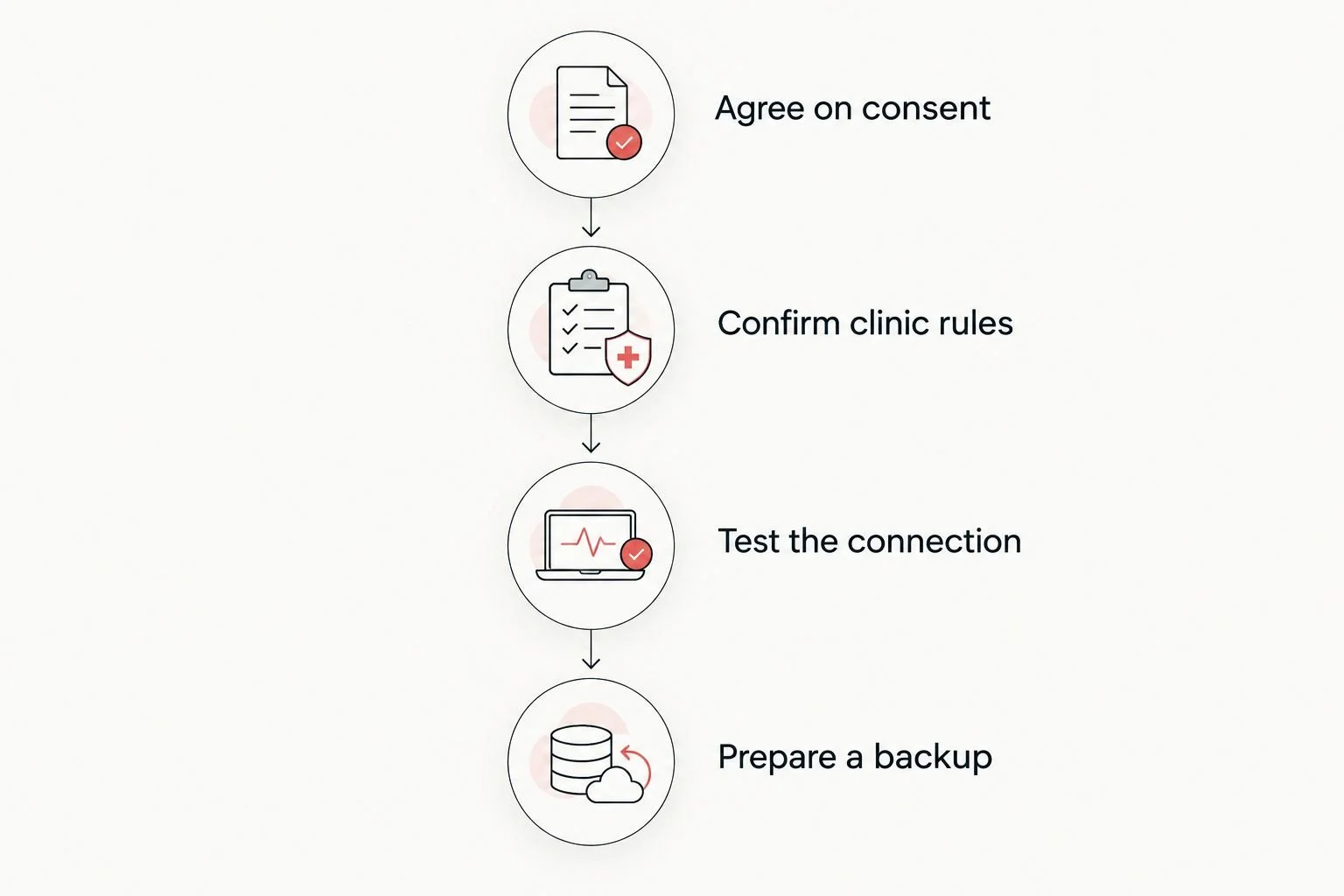
Agree on consent
Ask the surrogate whom she wants included and whether she wants private time with the clinician. Make room for a straightforward answer. She should not have to explain personal medical concerns in front of remote guests.
Name the intended viewers rather than describing an open-ended family group. If grandparents or other relatives also want to join, discuss that separately. Agreement to include intended parents is not an invitation to add everyone else.
Confirm clinic rules
Contact the office before the appointment and describe the request precisely: intended parents want to observe remotely during a surrogate’s ultrasound. Ask who can approve that arrangement and whether the office needs any paperwork beforehand.
For your 2026 planning checklist, include questions about personal devices, audio, screenshots, and when staff can pause the connection. Recording rules and viewing rules are separate issues.
Test the connection
Confirm which device will connect, who will hold or position it, and how intended parents will receive access. Test your microphone, speaker, and internet connection beforehand. Use a private location where unrelated people cannot overhear the visit.
If viewers live in different time zones, send the appointment time with the location’s time zone clearly stated. Avoid relying on a calendar invitation that someone has not checked.
Prepare a backup
Agree on what happens if the call drops or never connects. Ask whether approved images can be shared afterward and who will send them. Do not assume the sonographer can troubleshoot remote devices during the examination.
Why remote ultrasound access varies
Remote participation depends on the individual appointment, not simply the family’s preferred technology. Use these questions to identify the practical limits before making plans:
Patient preferences: Which viewers and conversations does the surrogate want included? What should remain private?
Examination purpose: Is this a diagnostic examination, an elective pregnancy session, or another type of scan? Ask how that affects participation.
Office policy: Does the provider permit personal calls, offer its own connection, or restrict filming?
Privacy boundaries: How will the device avoid capturing unrelated people, identifying paperwork, or other information?
Connection setup: Who manages the device, and what happens if the audio or picture fails?
Clinical workflow: When should viewers stay quiet, and when can staff address questions?
Confirm the arrangement for each provider and appointment type. An elective session and an OB examination serve different purposes, even when both involve seeing the pregnancy on a screen.
Does the surrogate need to consent to remote viewing?
Yes—the surrogate’s agreement belongs at the start of the plan. Ask the office how it documents permission and whether it requires a separate authorization for particular disclosures. This is an appointment-planning question, not something to settle through assumptions about the surrogacy agreement.
Consent should be specific enough to guide the visit. Discuss whether intended parents can hear medical conversations, whether the camera can show the patient, and whether recording is acceptable. Agree on how to pause the connection without debate.
For 2026 appointments, reconfirm the plan if the viewers or examination change. A previous invitation does not answer every privacy question for a later visit. Direct questions about contractual rights or disputed access to qualified legal counsel, not the sonographer.
Can intended parents record the ultrasound call?
Recording requires its own discussion; permission to watch is not permission to record. Ask both the surrogate and the provider about screen recording, screenshots, audio capture, and later sharing. Do not start recording while waiting for someone to object.
Keep social sharing separate, too. A private recording for intended parents is different from posting a clip online or forwarding it to relatives. Agree on the audience before creating or distributing a copy.
If your goal is simply to preserve a memory, ask whether the provider supplies approved images or video. That request avoids assuming a live call must also become a permanent recording.
Does watching remotely give you access to the medical report?
No—remote attendance and medical-record access are separate arrangements. Ask the provider what authorization or documentation it requires before sending reports or images to intended parents. Do not assume being present on a call makes you a designated recipient.
Clarify what you are requesting. A keepsake image, a video clip, and a diagnostic report do different jobs. Medical findings should be explained through the treating team’s established process, not interpreted from a remote screen.
Before the visit, identify who receives clinical results and who coordinates follow-up questions. If records must move between providers, ask the office about its process rather than forwarding a screenshot as a substitute.
How should intended parents participate during the scan?
Treat remote attendance as an invitation to observe, not a request to direct the sonographer. Join from a quiet, private room and keep your microphone muted when you are not speaking. Ask when questions are welcome.
Avoid requesting repeated movements, extra views, or a longer examination for the call. A dropped connection is not a reason to prolong scanning. Let the staff finish the examination and use the agreed backup afterward.
If the sonographer becomes quiet, do not try to diagnose the meaning of that silence. Ask how and when findings will be communicated. The remote picture is not a replacement for a clinical explanation.
Where does private pregnancy ultrasound fit?
The Ultrasound Concierge is best suited to patients seeking private pregnancy ultrasound in Keller and Willow Park. Its stated services include diagnostic and elective imaging in a personalized setting. Remote access still needs direct confirmation; do not assume livestreaming, recordings, or a particular calling platform is included.
For intended parents, the useful question is specific: can this appointment accommodate an approved remote viewer while respecting the surrogate’s preferences? Ask what the arrangement includes and what it does not. A private setting alone does not establish a remote-viewing policy.
If you are considering The Ultrasound Concierge for pregnancy ultrasound in 2026, describe the surrogacy context when making your inquiry. For diagnostic care, coordinate the examination and results with the treating clinician. Elective viewing does not replace indicated prenatal assessment.
Ask about remote ultrasound participation
Confirm consent requirements, viewing options, and appointment arrangements before booking.
FAQ
Can intended parents watch a surrogate’s ultrasound from another state?
Yes, when the surrogate agrees and the imaging provider permits the arrangement. Confirm the connection method and appointment time zone before the visit.
Can we use our own phone for a video call during the ultrasound?
Use a personal phone only if the imaging provider permits it and the surrogate agrees. Ask about device placement, audio, and which parts of the visit can be shared.
Does a surrogacy agreement automatically let us watch every scan?
Do not treat a surrogacy agreement as automatic confirmation of clinic access. Ask the provider about its requirements and direct questions about contractual rights to qualified legal counsel.
Can intended parents take screenshots during the call?
Take screenshots only after obtaining agreement from the surrogate and permission under the provider’s rules. Watching, capturing images, and sharing those images are separate requests.
What should we do if the ultrasound video call disconnects?
Use the backup you agreed on before the appointment. Let the examination continue and ask about approved images or clips afterward rather than requesting extra scanning for the connection.
Can remote viewers ask the sonographer medical questions?
Ask the office when questions are appropriate and who will explain clinical findings. Remote attendance does not replace the treating team’s results and follow-up process.
Does The Ultrasound Concierge offer livestreaming for surrogate pregnancies?
Confirm remote-viewing arrangements directly with The Ultrasound Concierge before booking. Its stated pregnancy ultrasound services do not establish whether livestreaming or personal video calls are offered.
One last thing
Decide how to end the call before you decide how to start it. Agree on a simple pause request that the surrogate or staff can use whenever privacy or clinical care requires it. No explanation needs to happen in front of an audience.
For your 2026 appointment, write down the approved viewers, recording boundaries, connection method, and backup. Share that plan with the surrogate and confirm it with the office. The goal is a meaningful shared moment with clear boundaries—not uninterrupted access to every part of someone’s medical visit.