
For egg freezing patients, fertility ultrasound is imaging of the ovaries and developing follicles to help a fertility specialist assess ovarian response and plan treatment. This 2026 guide explains what scans show, how to prepare, and how to coordinate local imaging without separating it from your specialist’s care.
TL;DR
Fertility ultrasound for egg freezing patients tracks follicles; it does not count mature eggs or guarantee future pregnancy.
Your fertility specialist sets the monitoring schedule and interprets ultrasound findings alongside your treatment history and bloodwork.
The Ultrasound Concierge provides private fertility ultrasound imaging for patients in Keller and Willow Park, Texas.
Before booking outside monitoring, confirm clinic acceptance, required measurements, report delivery, and bloodwork arrangements.
Why fertility ultrasound matters for egg freezing patients
Egg freezing monitoring supports decisions about medication response and retrieval timing. Unlike a general pelvic scan, a monitoring examination must answer the questions your treating fertility clinic needs answered at that stage of treatment.
The Ultrasound Concierge is best for Keller and Willow Park patients seeking private fertility ultrasound in a calm, personalized setting. Explore The Ultrasound Concierge as a local imaging option, then ask your fertility clinic whether outside monitoring fits your treatment plan.
For your 2026 cycle, distinguish the imaging appointment from the clinical decision that follows it. A scan produces findings; your treating specialist decides what those findings mean for medication, further monitoring, and egg retrieval.
That distinction matters when you work, travel, or receive treatment away from home. Local imaging only helps when the examination, reporting process, and timing meet your fertility clinic’s requirements.
Understand what a fertility scan can tell you
A baseline ultrasound gives your specialist information about the ovaries before stimulation. Depending on the examination ordered, the report can include small visible follicles, ovarian appearance, and findings such as cysts that need clinical interpretation.
During stimulation, ultrasound tracks developing fluid-filled follicles in the ovaries. Follicles contain developing eggs, but ultrasound does not show whether each follicle contains a retrievable, mature egg.
Keep these distinctions clear:
Antral follicle count: a count of small follicles visible during a baseline examination; it helps assess likely ovarian response.
Follicle measurements: measurements used to follow follicular growth during stimulation.
Egg maturity: determined after retrieval through laboratory assessment, not by ultrasound alone.
Future pregnancy potential: not established by a scan or a follicle count.
Your specialist interprets imaging alongside factors such as age, medical history, hormone testing, and previous treatment response. Avoid treating a report as a stand-alone prediction of how many eggs you will freeze.
Plan your fertility ultrasound appointments
1. Get your fertility clinic’s instructions in writing
Start with your clinic’s patient portal or nursing team. Ask what examination is needed, when it should happen, and whether the clinic accepts monitoring performed elsewhere.
For a 2026 treatment cycle, use current instructions rather than an older checklist or another patient’s schedule. Baseline and stimulation appointments serve different purposes, and your specialist can change the plan as treatment progresses.
Make a 1-page monitoring plan for your own reference. This is an organizational aid, not a replacement for medical orders; keep the original instructions available for the imaging provider.
Request the examination order and clinical reason for imaging.
Confirm the appointment date or scheduling window.
Ask which measurements and images the clinic requires.
Record the clinic’s report deadline and delivery method.
Identify who will give you treatment instructions afterward.
2. Confirm that outside monitoring fits your cycle
Before arranging a local scan, ask your treating clinic to approve the proposed monitoring arrangement. Do not assume that any pelvic ultrasound report will meet an egg freezing program’s requirements.
Keeping monitoring within your fertility clinic offers direct coordination with the treatment team. Outside monitoring adds another handoff, so the potential convenience depends on whether the clinic receives usable findings when needed.
Save 2 care-team contacts: the fertility clinic’s monitoring team and the imaging office. Keep the clinic’s after-hours instructions separately so you know where to turn if symptoms develop.
Ask whether outside ultrasound monitoring is accepted.
Confirm who needs to receive the report and images.
Check whether bloodwork is required alongside imaging.
Ask what happens if a report is incomplete or delayed.
Confirm who is responsible for reviewing results that day.
3. Match the imaging provider to the ordered examination
Use the written order to compare providers yourself before booking. Ask specifically about fertility monitoring rather than relying on a general description of pelvic or pregnancy ultrasound services.
The Ultrasound Concierge offers fertility imaging within its private ultrasound services. Review the services, then ask whether the requested examination and your clinic’s reporting requirements can be accommodated. Private imaging does not replace your specialist’s responsibility for treatment decisions.
A direct inquiry with the order in hand gives the imaging office something specific to assess. It also helps you avoid booking an appointment that does not match the clinical request.
Name the examination exactly as your clinic ordered it.
Ask whether the requested scanning approach is performed.
Confirm the required follicle measurements can be documented.
Ask how reports and images reach the treating clinic.
Check what paperwork must arrive before the visit.
4. Prepare for the scanning approach your clinician requests
Fertility monitoring commonly uses transvaginal ultrasound because it provides close views of the ovaries. The examination involves a covered ultrasound probe placed in the vagina with your consent; an abdominal approach uses a probe over the lower abdomen.
Preparation differs between approaches. Transvaginal imaging generally uses an empty bladder, while an abdominal examination can require a full bladder. Follow the imaging office’s instructions for your specific appointment rather than applying pregnancy-scan advice.
Tell the team about pelvic pain, difficulty with prior internal examinations, or anything that would help you feel more comfortable. You can ask questions, request a pause, or decline an examination; discuss alternatives and their limitations with your clinician.
Confirm bladder instructions before leaving home.
Bring the order and requested identification or records.
Tell the team about relevant symptoms or prior difficulties.
Ask how consent and a chaperone are handled.
Discuss positioning, explanations, and pauses before scanning begins.
5. Keep appointments connected to your treatment timeline
Use your phone calendar or a paper planner to record appointments and clinic instructions. Keep medication directions separate from your own interpretation of ultrasound measurements.
Your monitoring schedule is individualized. Do not delay a requested scan because a previous appointment seemed reassuring, and do not change medication or trigger timing after comparing your measurements with someone else’s online.
Keep 3 scheduling details visible: the scan appointment, any bloodwork appointment, and the clinic’s result deadline. If one changes, notify the relevant office instead of assuming the other team has received the update.
Enter the exact date and location for each appointment.
Record any accompanying laboratory instructions.
Allow for travel and check-in requirements.
Notify your clinic immediately about a missed monitoring visit.
Follow the clinic’s instructions if results are still pending.
6. Close the loop after every monitoring scan
Before leaving the imaging appointment, ask how the report will be sent. Then follow your fertility clinic’s process for confirming receipt and obtaining instructions.
A sonographer’s description during an examination is not a medication plan. Your specialist needs the completed findings and any other required information before advising you about treatment.
When you receive results, ask for explanations in plain language. Understanding what happens next is more useful than trying to assign meaning to each measurement yourself.
Confirm the correct clinic and recipient details.
Ask when the report is expected to be transmitted.
Check receipt through the clinic’s approved communication channel.
Obtain treatment instructions from the fertility team.
Save the report if your clinic provides access.
7. Plan symptom support and post-retrieval follow-up
Ask your fertility clinic about expected symptoms and its urgent-care instructions before stimulation begins. Monitoring appointments are not a substitute for assessment when you feel unwell.
Seek urgent medical care for severe or worsening abdominal pain, trouble breathing, fainting, or heavy bleeding. Contact your fertility clinic promptly about concerning symptoms during stimulation or after retrieval; do not wait for a routine private scan.
Follow-up imaging after retrieval depends on symptoms and your treating clinician’s assessment. There is no single waiting interval that makes a follow-up scan appropriate for everyone.
Save the clinic’s daytime and after-hours contact instructions.
Ask which symptoms require an immediate call.
Follow the clinic’s activity and recovery guidance.
Report worsening symptoms instead of self-scheduling reassurance imaging.
Arrange follow-up imaging only as clinically directed.
Compare your monitoring options
For egg freezing care in 2026, choose by clinical fit before convenience. The key question is whether the monitoring arrangement supplies the information your treating specialist needs without introducing an unresolved handoff.
Monitoring at your treating fertility clinic
Best for: Patients who want imaging and treatment decisions within the same care team
Main advantage: Keeps monitoring closely connected to the treatment plan
Key limitation: Requires attending the treating clinic’s location
Clinic-approved outside diagnostic imaging
Best for: Patients receiving treatment away from home or arranging local monitoring
Main advantage: Allows imaging outside the treating clinic when approved
Key limitation: Requires agreement on examination details, reporting, and bloodwork
The Ultrasound Concierge fertility imaging
Best for: Keller and Willow Park patients seeking a private, personalized imaging setting
Main advantage: Offers local fertility ultrasound within a concierge-style service
Key limitation: Suitability for your specific cycle must be confirmed with both teams
A comfortable setting matters, but it cannot compensate for an examination your clinic cannot use. Confirm clinical compatibility first; then consider location, communication, and your preferences for the visit.
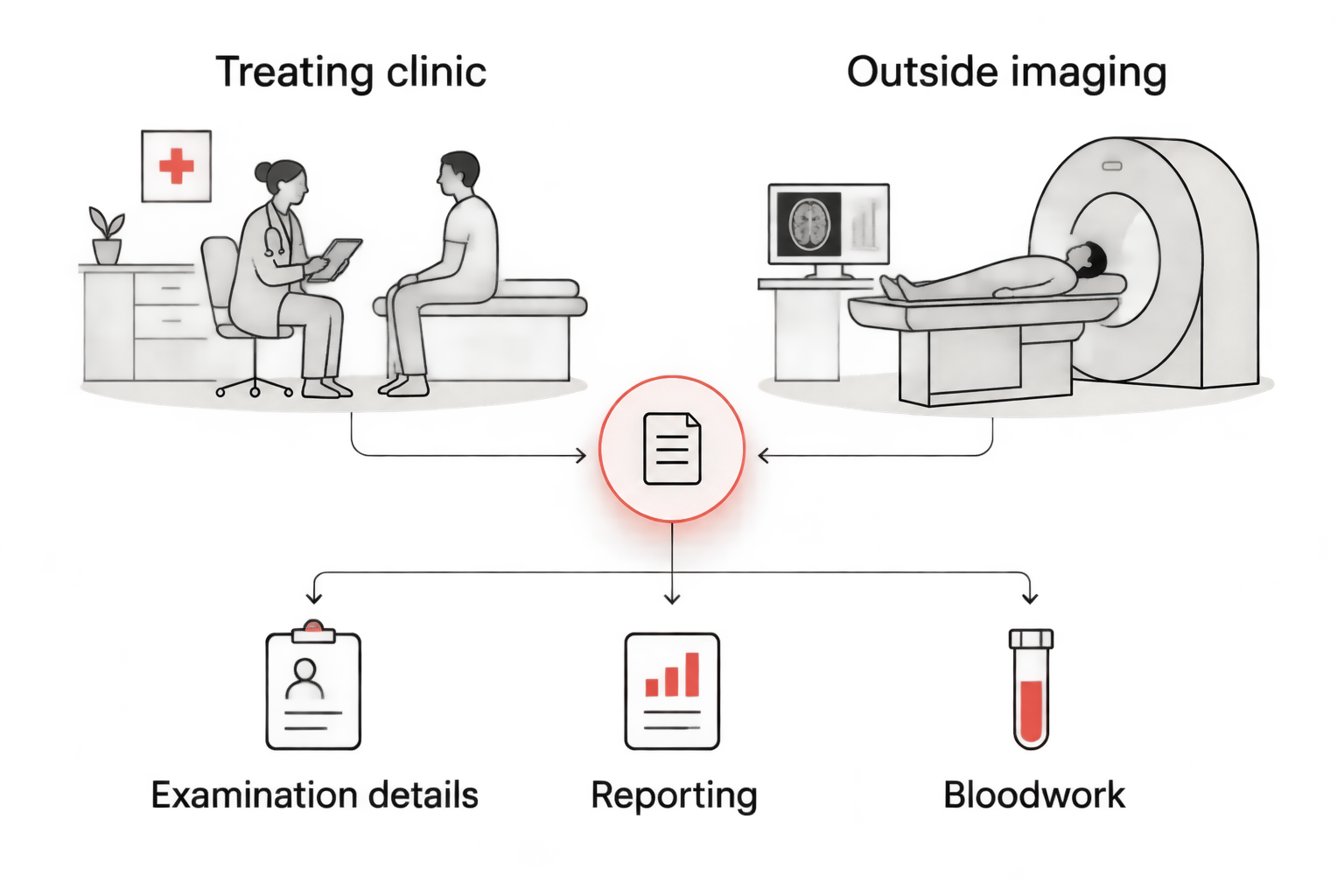
Outside monitoring needs an agreed plan for examination details, reporting, and bloodwork.
Common mistakes egg freezing patients make
Treating a follicle count as an egg count
A follicle count describes what is visible on ultrasound, not a guaranteed retrieval result. Ask your specialist to explain the distinction between follicles seen, eggs retrieved, and mature eggs frozen.
Booking local imaging before getting clinic approval
An appointment is not useful simply because it is nearby. Confirm outside-monitoring acceptance and report requirements before making arrangements, especially when treatment is managed elsewhere.
Assuming bloodwork is included with the scan
Ultrasound and laboratory testing are separate parts of monitoring. Ask your fertility team what is required and confirm where each component will happen; do not assume an imaging appointment covers both.
Comparing measurements without clinical context
Another patient’s follicle measurements do not determine your next step. Your specialist interprets growth patterns and the broader treatment picture rather than using an isolated measurement from a discussion board.
Waiting for routine imaging when symptoms worsen
A scheduled scan is not an emergency assessment plan. Use your clinic’s urgent instructions or seek urgent medical care when symptoms warrant it.
FAQ
What is fertility ultrasound for egg freezing patients used for?
Fertility ultrasound for egg freezing patients assesses the ovaries and follows developing follicles during treatment. Your fertility specialist uses the findings alongside other clinical information to guide monitoring and retrieval planning.
Can an ultrasound tell me exactly how many eggs I will freeze?
No, ultrasound cannot tell you exactly how many mature eggs will be frozen. It shows follicles; the number of eggs retrieved and their maturity are established later.
Do I need a transvaginal ultrasound for egg freezing monitoring?
Transvaginal ultrasound is commonly used for egg freezing monitoring, but your clinician determines the appropriate examination. Discuss consent, comfort needs, and any alternative approach before the scan.
Can I have monitoring scans near home while my fertility clinic is elsewhere?
Outside monitoring is an option only when your treating clinic accepts the arrangement. Confirm the required examination, report deadline, image transfer, and bloodwork plan before booking.
How many ultrasound appointments will I need during egg freezing?
Your fertility specialist determines the number of monitoring appointments according to your treatment plan and response. Do not use another patient’s schedule as a substitute for your clinic’s instructions.
Should I drink water before a fertility ultrasound?
Follow the preparation instructions for your specific scanning approach. Transvaginal examinations generally use an empty bladder, while abdominal examinations can require a full bladder.
Can a private ultrasound provider tell me when to take my trigger injection?
Your treating fertility team should give you trigger-injection instructions. Do not change medication timing based on an imaging conversation or a report you interpret yourself.
One last thing
For your 2026 egg freezing plan, ask one practical question before booking: Who confirms that my fertility clinic received the completed report? A clear answer helps prevent a completed scan from becoming an unfinished handoff.
Bring the written order to every new imaging arrangement. Your care stays connected when both offices understand what is needed and who acts on the results.