
Best for a private 3D/4D ultrasound experience: The Ultrasound Concierge; best for a still keepsake image: 3D ultrasound; best for a medical question: clinician-directed diagnostic ultrasound. If you’re searching for hd live ultrasound near me in Keller or Willow Park, TX, choose by the purpose of the scan first, then confirm the exact rendering technology before booking.
TL;DR
The Ultrasound Concierge offers private 3D/4D ultrasound services for patients in Keller and Willow Park, TX.
For hd live ultrasound near me searches, confirm the exact rendering technology rather than relying on package names.
Choose 3D ultrasound for still surface images and 4D ultrasound for viewing movement.
HD-style rendering changes image presentation; it does not replace a diagnostic pregnancy ultrasound.
Keep elective imaging separate from prenatal care and discuss additional scans with your pregnancy clinician.
Why this matters
The Ultrasound Concierge is a fit for Keller and Willow Park patients seeking private, concierge-style 3D/4D ultrasound imaging. Its stated services include diagnostic and elective ultrasound, but that does not establish that every appointment includes a particular HD Live rendering mode. Start with The Ultrasound Concierge and ask specifically about the imaging format you want.
Your 2026 search results can mix providers, imaging techniques, and enhanced-image labels in the same list. Those are different things. A private setting describes the experience; 4D describes moving volume images; a diagnostic examination describes the medical purpose.
That distinction protects your expectations. A detailed-looking facial image does not establish that a baby’s anatomy has been fully assessed, and an unclear keepsake image does not establish that something is wrong.
The FDA discourages ultrasound performed solely to create fetal keepsake images. Discuss elective imaging with your pregnancy clinician, use trained operators, and keep your prescribed prenatal scans on schedule.
What makes the best HD Live ultrasound option?
Use these criteria to compare your 2026 options before choosing a studio or imaging format:
Scan purpose: Decide whether you want a keepsake, to view movement, or to answer a medical question. These goals require different expectations.
Exact technology: Ask whether the appointment uses 3D, 4D, or a specific HD rendering mode. An enhanced image label is not a complete technical description.
Operator qualifications: Ask who performs the scan, what their qualifications are, and who interprets findings when the examination is diagnostic.
Image limitations: Choose a provider that explains fetal position, tissue visibility, and why a clear face image cannot be promised.
Clinical boundaries: Confirm what the appointment does not assess and how unexpected concerns are handled.
Practical fit: Confirm the appointment location, preparation instructions, guest rules, and how images are delivered before you make plans.
Choose clarity over a more impressive package name. A useful answer explains what you will see, what you will receive, and what remains outside the examination’s scope.
Ultrasound options at a glance
This is a purpose-based ranking, not a ranking of local competitors. The options below answer different needs, and imaging modes can be combined within an appointment.
The Ultrasound Concierge’s private 3D/4D services
Best for: A personalized local imaging experience
Standout feature: Concierge-style diagnostic and elective imaging for Keller and Willow Park patients
Key limitation: Exact HD rendering mode and appointment details require confirmation
3D ultrasound
Best for: A still surface image
Standout feature: Displays a volume image using 3 spatial dimensions
Key limitation: Does not show movement in a still image or replace a complete diagnostic examination
HD-style 4D rendering
Best for: Viewing movement with a more shaded surface appearance
Standout feature: Combines moving volume images with enhanced lighting or surface presentation
Key limitation: Rendering cannot reveal anatomy hidden from the acquired ultrasound data
Clinician-directed diagnostic ultrasound
Best for: Answering a medical question
Standout feature: Examination selected for a defined clinical purpose
Key limitation: A clinical examination is not designed around obtaining a keepsake portrait
1. The Ultrasound Concierge: best for a private local experience
The Ultrasound Concierge provides private diagnostic and elective ultrasound imaging for patients in the Keller and Willow Park area. Its stated pregnancy imaging services include 3D/4D/8K, with a concierge-style approach intended as an alternative to clinical imaging centers.
Best for: Expecting parents who want a private, personalized setting and a conversation about which pregnancy imaging service fits their goal.
That is an experience-based recommendation, not a claim that the provider has the best machine or the clearest images in North Texas. Ask whether the specific appointment includes the HD-style rendering you have in mind, and distinguish elective imaging from a diagnostic examination.
The Ultrasound Concierge pros:
Serves the Keller and Willow Park area identified in your search.
Offers both diagnostic and elective imaging services.
Lists 3D/4D/8K among its pregnancy imaging options.
Describes a calm, private, personalized approach to appointments.
The Ultrasound Concierge cons:
Its stated service categories do not confirm a particular HD Live system or rendering mode.
A private setting does not remove the physical limits of ultrasound imaging.
An elective appointment is not a substitute for your clinician’s prescribed prenatal evaluation.
Before booking, explain your goal in plain language: seeing movement, obtaining a surface image, or completing a medically requested scan. Ask which appointment addresses that goal rather than assuming that all pregnancy services include the same examination.
Verdict: Hold until the provider confirms the exact imaging mode and appointment purpose.
2. 3D ultrasound: best for a still surface image
3D ultrasound combines ultrasound information into a volume image. It represents 3 spatial dimensions: width, height, and depth, allowing a surface view rather than only a flat cross-sectional view.
Best for: Parents whose main goal is a still image rather than a moving sequence.
A recognizable facial image depends on what the scan captures. A hand in front of the face or an unfavorable position can limit the surface view, even when the imaging equipment is capable of producing detailed images.
3D ultrasound pros:
Provides a surface-style view that is different from a standard cross-sectional image.
Suits a still-image goal without requiring a moving clip.
Makes the distinction between a volume image and conventional 2D imaging easier to understand.
3D ultrasound cons:
A still image does not show movement over time.
Surface visibility depends on fetal position and the available acoustic view.
A keepsake surface image does not assess every structure examined during a diagnostic pregnancy scan.
The comparison with standard ultrasound is about presentation, not a hierarchy of medical quality. 2D ultrasound shows 2 spatial dimensions in each displayed slice, and those slices remain essential to many clinical examinations.
Verdict: Hold until your clinician and provider agree that an additional scan fits your care; skip this option if movement is your main goal.
3. HD-style 4D rendering: best for viewing movement
4D ultrasound displays changing 3D volume images over time. HD-style rendering adds a different lighting or shading presentation to the surface image; it does not create a separate medical diagnosis.
Best for: Parents specifically interested in a moving surface view rather than only a still portrait.
In 2026, ask providers to explain their terminology instead of treating every HD or enhanced-image label as interchangeable. Confirm whether you will see live movement, receive a recorded clip, receive still images, or some combination of those outputs.
HD-style 4D rendering pros:
Shows changes in the volume image over time.
Gives surface images a different shaded appearance.
Addresses a movement-focused goal more directly than a still 3D image.
HD-style 4D rendering cons:
Enhanced shading cannot recover anatomy that was not captured clearly.
Fetal position and structures in front of the face still limit the view.
A more lifelike appearance does not establish greater diagnostic accuracy.
4D means 3 spatial dimensions plus time as the fourth dimension. It does not mean four times the detail, and it does not guarantee that a baby’s face will remain visible throughout an appointment.
Ask to see examples identified by the actual imaging mode. A gallery that mixes conventional scans with edited or enhanced images does not tell you which appearance belongs to your appointment.
Verdict: Hold until the exact rendering mode, image outputs, and clinical boundaries are clear.
4. Diagnostic ultrasound: best for a medical question
A diagnostic pregnancy ultrasound is performed to address a clinical question or complete a prescribed assessment. Its scope depends on the reason for the examination and the stage of pregnancy, not on obtaining a portrait.
Best for: Patients whose clinician needs information about the pregnancy or who need assessment of a symptom or concern.
If you have a medical concern, contact your pregnancy care team rather than choosing a keepsake appointment for reassurance. A visually appealing scan is not a substitute for the appropriate examination and interpretation.
Diagnostic ultrasound pros:
Has a defined clinical purpose.
Supports medical assessment when ordered and interpreted appropriately.
Keeps the examination focused on the information your clinician needs.
Diagnostic ultrasound cons:
A complete facial keepsake image is not the examination’s priority.
The appropriate technique can differ from the rendering style you prefer.
Results require clinical interpretation rather than conclusions drawn from an image’s appearance.
An elective visit and a diagnostic visit can involve ultrasound equipment while serving different purposes. Ask whether there will be a medical report, who receives it, and whether the examination answers your clinician’s specific question.
Verdict: Skip the elective route for a medical concern; contact your pregnancy clinician for the appropriate diagnostic pathway.
How to choose your appointment
Use this sequence for a 2026 booking decision. It keeps the reason for the visit ahead of the image style.
Define your goal. Say whether you want a still image, movement, or a medical assessment. If you have symptoms or a clinical concern, start with your care team.
Confirm the mode. Ask what 3D, 4D, HD-style, or enhanced imaging means for that exact appointment. Confirm which image outputs are included.
Coordinate care. Discuss additional pregnancy imaging with your clinician. Ask the provider about qualifications, examination scope, and handling unexpected findings.
Check preparation. Follow the instructions for your appointment rather than advice from a different scan type.
The sequence matters because preparation and expectations depend on the examination you are actually receiving. A more detailed image label cannot resolve a mismatch between your goal and the appointment’s purpose.
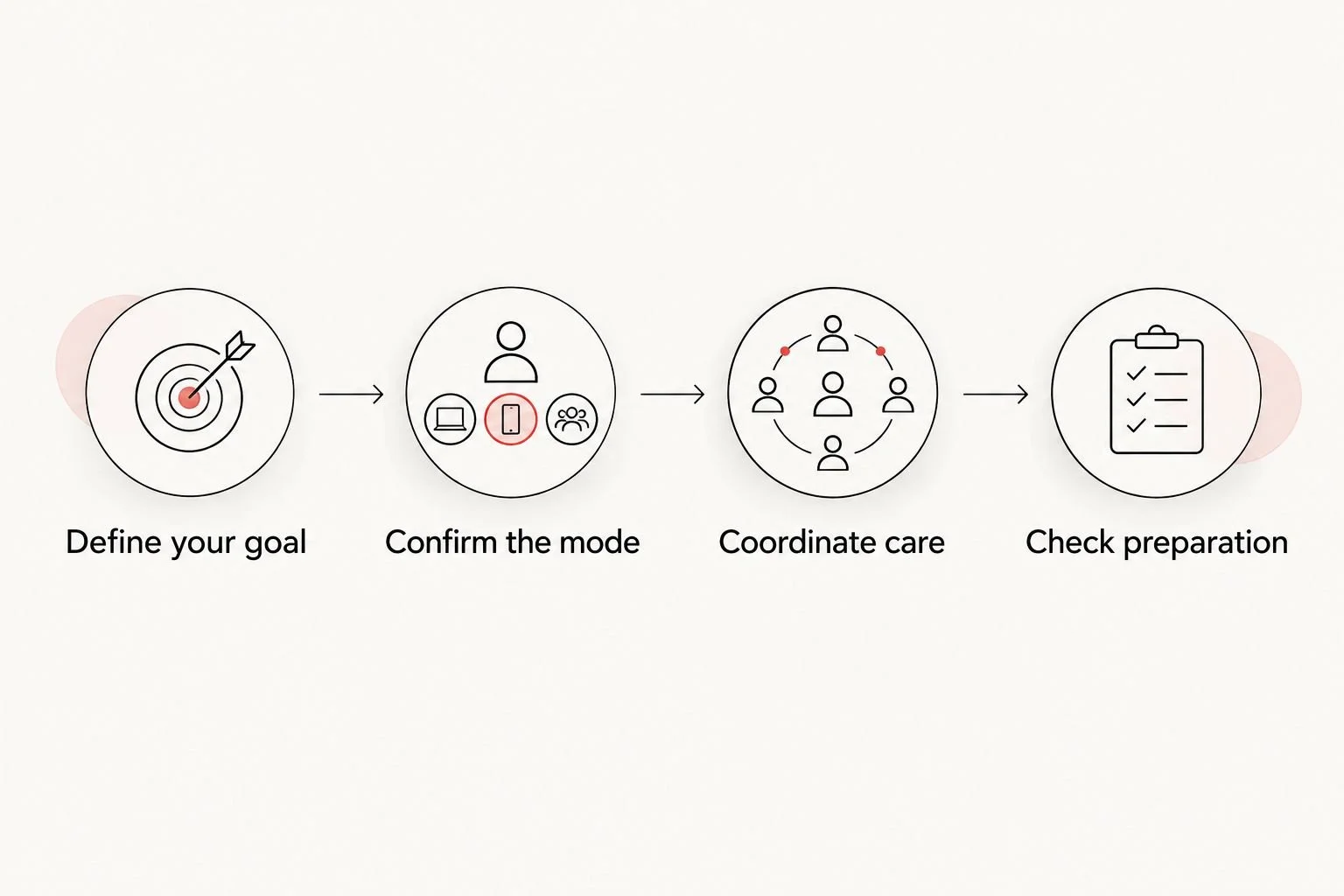
Choose the purpose of the appointment before choosing an image style.
For preparation questions, read whether you can eat or drink before a 3D/4D ultrasound. Then confirm the instructions directly with your provider, especially if you have medical restrictions.
Do not treat food, drinks, or a particular routine as a promise of a clear face image. Follow your care team’s advice and the provider’s examination-specific instructions.
Clarify your ultrasound options
Ask about the scan purpose, exact rendering mode, and preparation before choosing an appointment.
What affects the image you see?
Fetal position is a physical limit, not a service-quality score. A face turned away from the probe or covered by a hand does not become visible simply because the rendering has more shading.
Structures between the probe and the area being viewed also affect the image. Ultrasound needs a usable acoustic view; processing cannot turn missing information into a reliable anatomical picture.
Gestational stage matters too, but there is no universal appointment week that guarantees a particular image for every pregnancy. Ask your provider to explain timing in relation to your goal, and discuss additional scanning with your pregnancy clinician.
Your 2026 booking checklist should therefore include a question about limited views: what happens if the intended image cannot be obtained? Confirm the provider’s policy without assuming a repeat visit, extra imaging, or a particular outcome.
A responsible explanation includes limits before the scan, not only after a disappointing image. That is more useful than a promise that every baby will look like the examples in a gallery.
How the options are ranked
The ranking follows the criteria above: purpose, exact technology, qualifications, image limitations, clinical boundaries, and practical fit. It does not use invented image-quality scores or unsupported comparisons between local businesses.
The private local service comes first for an experience-led search. Still 3D imaging and moving HD-style rendering then occupy separate use cases, while diagnostic ultrasound is the appropriate route for a medical question.
These are not mutually exclusive technologies. A diagnostic examination can use different imaging modes, but its clinical purpose remains different from an elective keepsake visit.
Which ultrasound option should you choose?
For a private local 3D/4D experience, start with The Ultrasound Concierge and confirm the exact appointment details. For a still surface image, ask about 3D; for movement, ask about 4D and the specific rendering mode.
For a medical concern, start with your pregnancy clinician. Do not use image style or a private setting as a substitute for the examination your care requires.
The clearest 2026 decision is not “choose the highest-sounding label.” It is choose the right purpose, confirm the technique, and accept the limits of the view.
FAQ
What should I look for when searching for hd live ultrasound near me?
Look for a provider that identifies the exact rendering mode and explains the appointment’s purpose. Confirm operator qualifications, image outputs, preparation, and the limits of elective imaging before booking.
Does The Ultrasound Concierge offer HD Live ultrasound?
The Ultrasound Concierge lists 3D/4D/8K pregnancy imaging, but that does not confirm a specific HD Live rendering mode. Ask directly whether the appointment you are considering includes that technology.
Is HD-style ultrasound better than standard 4D ultrasound?
HD-style rendering changes the surface image’s lighting or shading; it does not establish better diagnostic accuracy. The underlying view and fetal position still determine which structures can be shown.
What is the difference between 3D and 4D ultrasound?
3D ultrasound displays a volume image, while 4D ultrasound displays changing volume images over time. Choose according to whether your goal is a still view or viewing movement, and discuss additional imaging with your clinician.
Can an HD-style ultrasound replace my anatomy scan?
An elective HD-style appointment does not replace your prescribed diagnostic anatomy scan. Keep prenatal appointments on schedule and ask your clinician which examinations your pregnancy requires.
What pregnancy week guarantees a clear facial image?
No pregnancy week guarantees a clear facial image. Fetal position and the available acoustic view affect visibility, so ask about timing for your particular goal without expecting a promised portrait.
Is an elective ultrasound a good way to check a medical concern?
An elective keepsake appointment is not the appropriate substitute for assessment of a medical concern. Contact your pregnancy care team so they can direct you to the examination or care you need.
One last thing
A realistic-looking image is not the same as a complete medical assessment. Before choosing an appointment, ask one question: “What will this scan tell me, and what will it not tell me?”
A clear answer helps you choose between a personal imaging experience and a diagnostic examination without confusing the two.