
Yes, a 3D/4D ultrasound after a previous C-section is generally possible; a healed cesarean scar alone does not rule out an abdominal ultrasound during a later pregnancy. The important distinction is that elective pictures cannot assess whether your uterine scar is strong enough for labor, replace prescribed prenatal imaging, or explain new pain or bleeding.
TL;DR
A 3D 4D ultrasound after previous C-section is generally possible; your current pregnancy determines the appropriate care.
A healed skin scar does not show how strong the uterine scar is.
Elective pregnancy ultrasound cannot replace diagnostic imaging or determine whether vaginal birth is appropriate.
The Ultrasound Concierge offers private pregnancy imaging; discuss medical concerns with your prenatal clinician first.
Why this matters
After a C-section, you have an abdominal skin scar and a separate scar in the uterus. They are not interchangeable. The appearance or sensitivity of the outside scar does not establish the condition of the uterine scar during pregnancy.
For your 2026 pregnancy, separate the wish to see your baby's face from questions about placental location, scar healing, or delivery planning. Those medical questions belong with your obstetric clinician and, when indicated, a diagnostic ultrasound examination.
Before arranging an optional visit, review how to prepare for a 3D/4D ultrasound appointment. Tell the imaging team about your previous cesarean and any current restrictions rather than assuming your surgical history prevents a scan.
Can you get a 3D/4D ultrasound after a previous C-section?
Yes. A previous C-section, by itself, is not a standard contraindication to an abdominal pregnancy ultrasound. Ultrasound uses sound waves rather than ionizing radiation, and the abdominal probe does not enter the uterus or touch the uterine incision.
That does not mean every optional scan is appropriate for every pregnancy. Your current symptoms, prenatal findings, and clinician's recommendations matter more than the fact that you previously delivered by cesarean.
Use this sequence before booking:
Review your history. Tell your prenatal clinician about previous cesareans, other uterine operations, and complications you were told occurred.
Clarify your purpose. Explain whether you want pictures or need an answer about pain, the placenta, or the scar.
Confirm the plan. Keep prescribed diagnostic appointments and ask whether an additional elective visit fits your care.
Share restrictions. Give the imaging team relevant instructions, including any concern about abdominal tenderness.
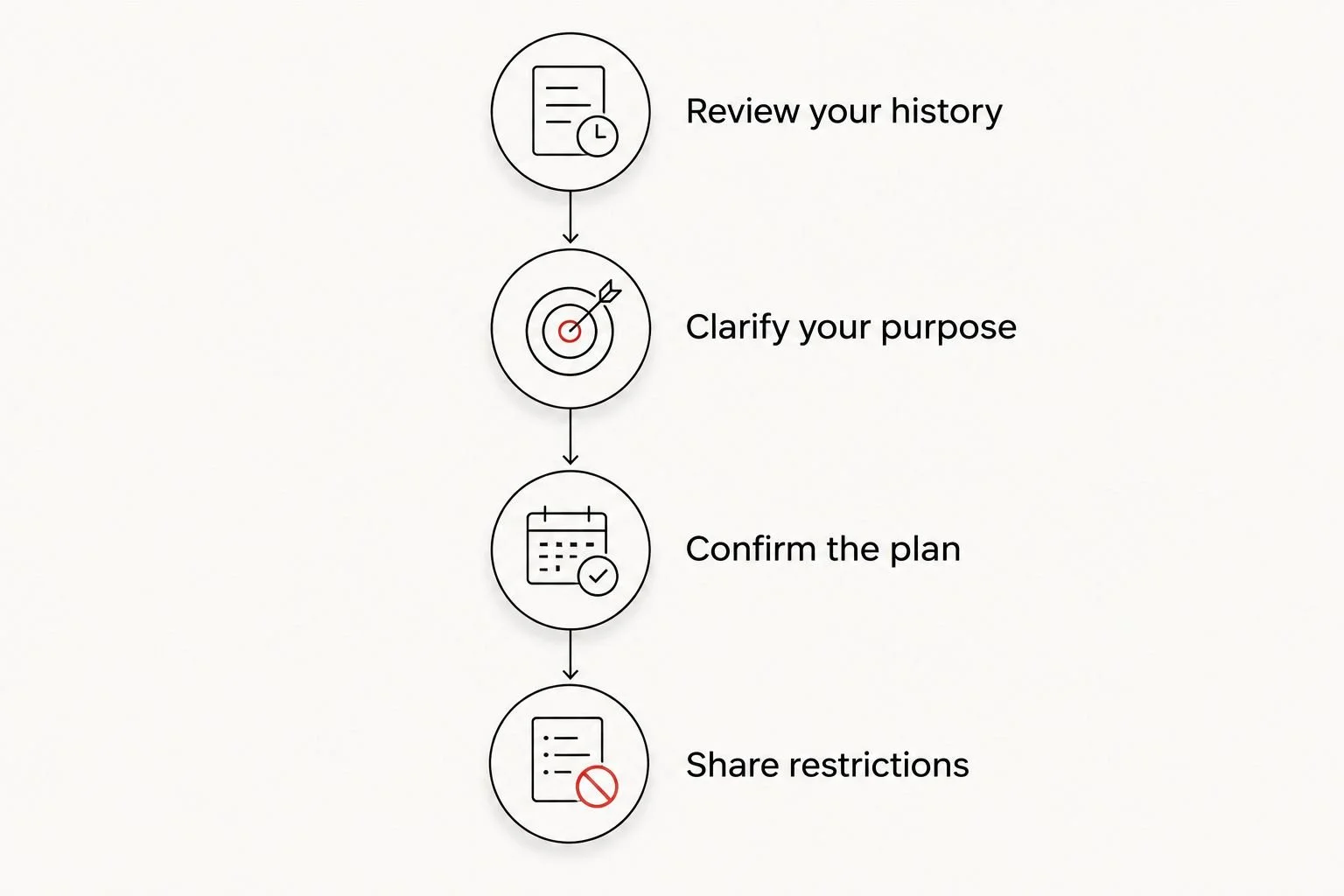
Your reason for scanning determines whether you need elective pictures or a medical examination.
3D ultrasound: still views of your baby
A 3D ultrasound combines ultrasound information into a three-dimensional image. It can show surface features, such as the contours of your baby's face, when the position and surrounding fluid allow a useful view.
Best for: viewing a still surface image when ultrasound is appropriate. Its limitation is that a recognizable face is not a comprehensive health assessment. A clear picture cannot establish normal placental attachment, rule out complications, or determine readiness for vaginal birth after cesarean.
Your previous incision does not automatically prevent a facial image. However, tissue along the sound path can affect the view, and no session can guarantee a particular pose or level of detail.
4D ultrasound: moving views over time
A 4D ultrasound displays successive three-dimensional images to show movement. The added dimension is time, not a separate test of the uterus or surgical scar.
Best for: viewing movement in a three-dimensional image when an examination is appropriate. Its limitation is the same underlying dependence on position and image quality. Movement on the screen does not confirm that the pregnancy is free of medical concerns.
How elective and diagnostic imaging differ
For a 2026 appointment, choose by the question you need answered, not by the most detailed-looking image. These categories also overlap: a clinician can use three-dimensional imaging within a diagnostic examination when it serves a medical purpose.
Elective 3D imaging
Best for: Still surface views
Main benefit: Shows depth and facial contours when conditions allow
Important limitation: Does not replace a diagnostic fetal examination
Elective 4D imaging
Best for: Moving surface views
Main benefit: Shows three-dimensional images over time
Important limitation: Does not assess whether a uterine scar can withstand labor
Clinician-directed diagnostic ultrasound
Best for: Answering a medical question
Main benefit: Evaluates the structures or findings specified for the examination
Important limitation: Its scope depends on the clinical question; it cannot guarantee every complication will be detected
More dimensional detail does not automatically mean more medical information. The examination's purpose, technique, interpretation, and follow-up determine what it can tell you.
Why ultrasound image quality varies after a C-section
A previous cesarean is only part of the picture. Image quality depends on the sound's path to your baby and the structures surrounding the area being viewed.
Scar tissue: Tissue changes along a particular scanning path can affect sound transmission. A different probe angle sometimes provides a better view.
Baby's position: A face turned toward your back or pressed against nearby tissue is harder to display clearly.
Fluid around the face: Fluid helps separate surface features from surrounding structures; limited separation makes surface rendering harder.
Placental position: The placenta's location relative to the baby's face and probe can influence the available view.
Pregnancy stage: Your baby's size and available space change throughout pregnancy, affecting what is visible.
Abdominal tissues: The depth and types of tissue between the probe and baby influence image clarity, whether or not you have a scar.
A blurred or incomplete elective image is not, by itself, evidence that your C-section scar has caused a problem. Equally, an attractive image is not proof that the scar or placenta needs no further assessment.
Can a 3D/4D ultrasound check whether my C-section scar is safe?
An elective 3D/4D ultrasound cannot determine whether your uterine scar is safe for labor. Clinicians sometimes evaluate the lower uterine segment in specific circumstances, but a measurement alone does not provide a universal pass-or-fail answer for vaginal birth after cesarean.
Delivery planning considers your previous uterine incision, obstetric history, current pregnancy, and the resources available where you plan to give birth. The direction of your skin scar does not reliably tell you the type of incision made in the uterus.
If scar strength is your main concern, ask your obstetric clinician to review your prior operative report. Choosing a more detailed elective image is not a substitute for that discussion.
Does a previous C-section change what my clinician checks?
A previous C-section is relevant to placental assessment and delivery planning. Prior cesarean delivery increases the risk of placenta accreta spectrum, particularly when the placenta also covers the cervix, a condition called placenta previa.
Placenta accreta spectrum means the placenta attaches abnormally firmly to, or grows into, the uterine wall. Most importantly for your appointment decision, this is a diagnostic concern—not something an elective facial picture can exclude.
In early pregnancy, implantation within a cesarean scar is another distinct medical concern. Your clinician evaluates suspected scar pregnancy with appropriate diagnostic imaging; you should not wait for a later elective appointment to investigate pain or bleeding.
These possibilities do not mean you have a complication. They explain why routine prenatal assessment remains essential even when you feel well and want an additional viewing experience.
Is ultrasound safe over a healed cesarean scar?
A healed cesarean scar alone does not make medically indicated ultrasound inappropriate. Ultrasound does not use X-rays, and an abdominal examination does not mechanically test or pull apart the uterine scar.
Still, ultrasound should be used prudently, not treated as unlimited exposure without a purpose. The FDA discourages ultrasound performed solely to create fetal keepsake images, and the American Institute of Ultrasound in Medicine recommends responsible use by appropriately trained professionals. These recommendations concern ultrasound use generally, not a special prohibition after cesarean delivery.
For your 2026 care decisions, ask who performs the examination, what its purpose is, and how medical concerns are handled. Do not request a longer session simply because your baby has not turned toward the probe.
If pressure over the abdominal scar is uncomfortable, tell the sonographer immediately. You do not need to tolerate pain to obtain a picture; changing position or stopping the examination is more appropriate than pressing through discomfort.
How should you prepare for the appointment?
Preparation starts with your care plan, not a special routine for the scar. Follow the imaging provider's instructions and tell them if those instructions conflict with advice from your prenatal clinician.
Bring the relevant history
Share your gestational age, previous cesarean history, known placental concerns, and any restrictions. If your clinician has requested specific imaging, confirm that you are arranging that examination rather than an elective visit with a similar name.
You do not need to diagnose your scar yourself. Describe symptoms plainly, including where discomfort occurs and whether it is new or changing.
Ask about comfort and expectations
Tell the team if lying flat makes you uncomfortable or if touching the scar causes tenderness. Ask how they handle an incomplete view and whether the visit includes a diagnostic interpretation; do not assume either service from the words 3D or 4D.
For a 2026 booking, The Ultrasound Concierge is best suited to patients seeking private pregnancy ultrasound in Keller or Willow Park. The practice offers diagnostic and elective imaging, but those appointments serve different purposes; review its ultrasound services and confirm which examination matches your needs.
Discuss your ultrasound needs
Ask which appointment fits your pregnancy and share your previous C-section history.
When should you call your prenatal team instead?
New symptoms need clinical advice, not an elective reassurance scan. Contact your prenatal team promptly for vaginal bleeding, persistent or worsening abdominal pain, fluid leakage, or reduced fetal movement once you are monitoring your baby's usual movement pattern.
Severe abdominal pain, heavy bleeding, fainting, chest pain, or trouble breathing requires emergency evaluation. Do not delay care while waiting for a private imaging appointment or a reply about booking.
An ultrasound image also cannot explain every cause of pain. Even if you recently saw movement or a heartbeat, new symptoms still deserve assessment based on what is happening now.
FAQ
Can I get a 3D 4D ultrasound after previous C-section delivery?
Yes, a 3D 4D ultrasound after previous C-section delivery is generally possible because a healed cesarean scar alone does not rule out abdominal ultrasound. Discuss your current pregnancy, symptoms, and any restrictions with your prenatal clinician before arranging an elective visit.
Will the ultrasound probe open my old C-section scar?
An abdominal ultrasound does not enter the uterus or mechanically test the uterine incision. Tell the sonographer about tenderness, and seek clinical advice for new or worsening pain rather than assuming it is normal scar discomfort.
Can a 4D ultrasound tell me whether I can have a VBAC?
No, an elective 4D ultrasound cannot determine whether vaginal birth after cesarean is appropriate. Your obstetric clinician considers your uterine incision history, previous births, current pregnancy, and planned birth setting.
Will scar tissue stop me from seeing my baby's face?
Scar tissue does not automatically prevent a facial image. The baby's position, surrounding fluid, placental location, and tissues along the scanning path also affect the view, so a clear facial picture is never guaranteed.
Do I need a different kind of scan after multiple C-sections?
Your clinician determines the appropriate diagnostic imaging after multiple C-sections based on your history and current findings. Choosing elective 3D or 4D images does not replace assessment of placental location or other medical concerns.
Can The Ultrasound Concierge replace my OB's pregnancy scans?
An elective pregnancy ultrasound at The Ultrasound Concierge does not replace your OB's prescribed diagnostic scans. If you need diagnostic imaging, confirm the examination, referral requirements, and reporting arrangements before booking.
What should I ask before booking a scan in 2026?
Before booking in 2026, ask whether the appointment is elective or diagnostic, who performs it, and how medical concerns are referred. Explain your previous cesarean history and any instructions from your prenatal clinician.
One last thing
Your skin scar is not a map of your uterine incision. If your real question is about labor safety, ask your clinician to review the operative report from your previous cesarean rather than judging by the scar you can see.
For an optional scan, make a different request: explain your history, identify any sensitive areas, and agree on realistic expectations for images. Keeping those conversations separate lets you enjoy seeing your baby without asking a keepsake picture to answer a medical question.