
Yes—an early diagnostic ultrasound after IVF can confirm how many embryos are visibly developing, but it cannot count every implantation event that occurred. The scan checks pregnancy location, gestational sacs, visible embryos, and cardiac activity when development is far enough along. A very early scan can leave the number uncertain, so your fertility team may need a follow-up before confirming a singleton or multiple pregnancy.
TL;DR
Can ultrasound confirm embryos implanted after IVF? Yes, once embryos are visible; it cannot reconstruct every earlier implantation event.
Gestational sacs, visible embryos, and cardiac activity provide different information; a sac count alone does not settle every case.
Your fertility clinic should interpret the scan alongside transfer dates, blood tests, symptoms, and earlier imaging.
The Ultrasound Concierge offers private diagnostic and fertility ultrasound services in Keller and Willow Park.
Why this matters
After an embryo transfer, you want a clear answer: did the transfer lead to a pregnancy, and is there more than one baby? Those are related questions, but they are not answered by the same finding. A positive pregnancy test detects a hormone; ultrasound shows where the pregnancy is developing and what is visible.
For your 2026 IVF care, choose a diagnostic examination coordinated with your fertility clinic—not an elective keepsake session—to assess early pregnancy number and location. If you are arranging imaging outside your clinic, start with how to sync fertility ultrasound monitoring with your IVF clinic. The report needs to answer your treating clinician's questions.
Can an ultrasound confirm how many embryos implanted after IVF?
Ultrasound confirms the number of identifiable developing embryos at the time of examination. It does not directly observe implantation, which happens before an embryo is large enough to see on a routine pregnancy scan. That distinction explains why the number transferred, the number that initially implanted, and the number developing later are not interchangeable.
Your clinician assesses several findings together:
Pregnancy location: Is a pregnancy identified inside the uterus, and are there concerning findings elsewhere?
Gestational sacs: How many pregnancy sacs are visible?
Yolk sacs and embryos: What structures are identifiable within the sacs?
Cardiac activity: Is cardiac activity present in each embryo when expected for its size and development?
Interval development: If an earlier scan exists, what has changed?
A gestational sac count is not always an embryo count. Identical twins can share an outer gestational sac, and a sac does not always contain a visible embryo at the first examination. The clinician needs the full scan, not a single saved picture.
For a 2026 appointment, ask whether the report distinguishes sacs, embryos, and cardiac activity rather than simply stating that the pregnancy test was positive.
When can an early IVF scan show embryos?
Early ultrasound findings appear in a sequence, not all at once. With transvaginal imaging, a gestational sac is often visible around 5 weeks of pregnancy; an embryo and cardiac activity commonly become visible around 6 weeks, with clearer assessment often possible by 7 weeks. These are general developmental milestones, not deadlines for diagnosing an individual pregnancy.
Pregnancy weeks are not counted from transfer day. Your fertility clinic calculates gestational age using the transfer date and the embryo's age at transfer, so being a certain number of days past transfer does not mean you are that many days pregnant.
A scan performed before the relevant structures are visible cannot provide the same answer as a later examination. Do not interpret an early missing finding as proof of loss without your clinician's assessment and the required follow-up. Measurements, image quality, symptoms, and previous findings all affect interpretation.
Which ultrasound examination answers the question?
The purpose of the appointment matters more than whether the images look detailed. Standard diagnostic imaging assesses early pregnancy structures; elective facial imaging serves a different purpose and does not replace that examination.
Transvaginal diagnostic ultrasound
Best for: Detailed assessment in very early pregnancy
Main benefit: Places the probe closer to the uterus for early structural assessment
Main limitation: Requires an internal examination and your consent; timing can still limit the answer
Transabdominal diagnostic ultrasound
Best for: Pregnancy assessment when structures are visible through the abdomen
Main benefit: Provides an external view of the uterus and surrounding area
Main limitation: Can show less detail than transvaginal imaging very early in pregnancy
Elective pregnancy ultrasound
Best for: Non-diagnostic viewing after appropriate medical assessment
Main benefit: Offers an opportunity to view pregnancy images
Main limitation: Does not replace a diagnostic evaluation of implantation, location, or viability
Your clinician selects the approach based on the clinical question and your circumstances. You can ask why an internal scan is recommended, what it involves, and what an external scan would leave unanswered. Consent remains part of your care.
Why confirmation varies between patients
The same transfer date does not guarantee the same ultrasound findings for every patient. These factors affect what the examination can establish:
Gestational age: Structures must be large enough to identify before the scan can count them reliably.
Examination approach: Transvaginal and abdominal imaging provide different views, particularly early in pregnancy.
Image visibility: Uterine position, fibroids, bowel gas, and other technical factors can affect the view.
Shared pregnancy structures: Identical twins can share an outer sac, making a simple sac count insufficient.
Changes over time: An early pregnancy can stop developing, so a later scan does not necessarily show every earlier implantation.
Clinical context: Transfer records, blood-test trends, symptoms, and earlier imaging help your clinician interpret an uncertain finding.
A 2026 scan report should describe what was actually seen and identify what remains uncertain. An honest inconclusive result is safer than a confident answer unsupported by the images.
Can one transferred embryo become twins?
Yes—one transferred embryo can split and develop into identical twins. That means the number of embryos transferred sets the treatment history, not an absolute limit of one baby after a single-embryo transfer.
The reverse distinction matters too. Transferring more than one embryo does not establish that each implanted or that each will continue developing. Ultrasound assesses the pregnancy that is present rather than assuming the outcome from the transfer record.
If twins are identified, your clinician also assesses whether they share a placenta or amniotic sac. Those findings help determine pregnancy monitoring; identifying two embryos is only the beginning of that assessment.
Can a high hCG result confirm twins?
No—a high hCG result cannot confirm twins or count implanted embryos. Hormone values overlap between singleton and multiple pregnancies, so a number that looks higher than expected is not a substitute for imaging.
Serial blood tests help your fertility team assess the pregnancy in context, especially before ultrasound is conclusive. They do not show where a pregnancy is located. Keep the ultrasound appointment even if your blood-test results seem reassuring.
Avoid comparing your result with someone else's online. The timing of the blood draw, treatment details, and individual variation make those comparisons unreliable for counting embryos.
Can the embryo count change on a later scan?
Yes—the documented count can change when a later scan reveals structures that were not visible earlier, or when a previously identified pregnancy stops developing. These are different explanations, and your clinician needs the earlier report to distinguish them.
A vanishing twin describes a multiple pregnancy in which one embryo or fetus stops developing and is subsequently absorbed or no longer seen. A later singleton scan therefore cannot always reconstruct the full early pregnancy history.
Likewise, an early scan showing one embryo does not make every later finding impossible. Ask whether the original examination was considered definitive or whether the report specifically recommended reassessment.
How to prepare for a useful post-transfer scan
For a 2026 appointment outside your fertility clinic, confirm the diagnostic purpose before booking. A calm setting matters, but the examination still needs the right clinical information and a clear route back to your treating team.
Confirm the purpose. State that you need a post-IVF diagnostic assessment of pregnancy location and number, not an elective viewing session.
Share transfer details. Provide the transfer date, embryo age at transfer, and number transferred, along with relevant blood-test results.
Bring prior reports. Earlier measurements and findings help the clinician assess development instead of treating each scan in isolation.
Confirm report routing. Ask who interprets the examination, how the report reaches your fertility clinic, and who explains the result.
Agree on follow-up. Know which clinician will decide whether another scan or blood test is needed.
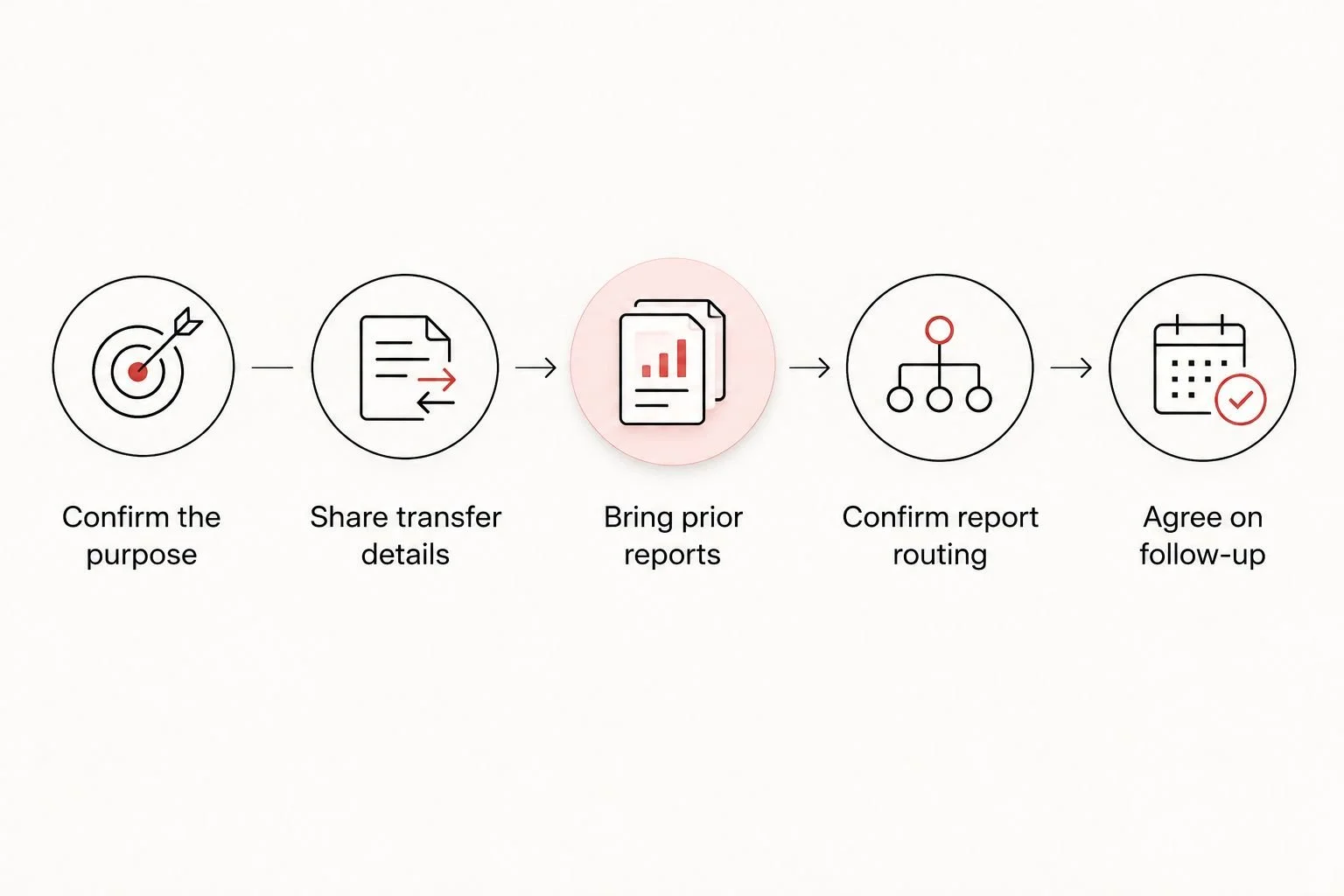
Coordinate the examination and the follow-up with your fertility clinic before the visit.
Follow the imaging provider's preparation instructions rather than guessing about bladder fullness. Tell the team about pain, bleeding, prior ectopic pregnancy, or other relevant history when arranging the examination—not only after imaging begins.
The Ultrasound Concierge is best for patients seeking private ultrasound services in Keller and Willow Park. The Ultrasound Concierge provides diagnostic and fertility ultrasound services, but a separate imaging visit does not replace your fertility specialist's management. Before scheduling, confirm that the requested post-transfer examination, interpretation, and report-sharing arrangements match your clinic's requirements.
Discuss your ultrasound needs
Ask about diagnostic imaging and coordination with your fertility clinic in Keller or Willow Park.
What should you ask after an uncertain result?
Start with the exact uncertainty: was the pregnancy location unclear, was an embryo not yet visible, or was cardiac activity not established? Those findings require different explanations. An incomplete answer does not become clearer by calling every uncertain scan a failed implantation.
Ask your clinician:
What did the scan confirm today?
What remains unconfirmed?
What finding will the next examination look for?
When should follow-up occur, and who will arrange it?
Which symptoms mean I should seek help sooner?
For your 2026 care plan, leave with a named point of contact and a follow-up instruction. Do not stop prescribed progesterone, estrogen, or other IVF medicines because of your own interpretation of a scan; contact your prescribing clinician.
When should symptoms take priority over counting embryos?
Seek emergency care for severe abdominal or pelvic pain, fainting, shoulder-tip pain, or heavy bleeding, especially if symptoms are sudden or worsening. Do not wait for a routine reassurance scan or an elective appointment.
IVF does not rule out an ectopic pregnancy. A pregnancy inside the uterus also does not completely exclude a simultaneous pregnancy outside it, known as a heterotopic pregnancy. Tell the evaluating clinician that you conceived through IVF, even if an earlier scan identified an intrauterine pregnancy.
Contact your fertility clinic promptly about new pain or bleeding that is not severe. Symptoms need clinical assessment; neither an embryo count nor a previously reassuring image explains every new symptom.
FAQ
Can an ultrasound tell exactly how many embryos implanted after IVF?
Ultrasound can identify developing embryos once they are visible, but it cannot count every earlier implantation event. A pregnancy that stopped developing before imaging might never have been visible.
How many weeks pregnant should I be before a scan can show embryos?
Around 6 weeks, transvaginal ultrasound commonly begins to show an embryo and cardiac activity, but findings vary. Your fertility clinic should schedule and interpret the examination using your transfer details and clinical history.
Does one gestational sac mean there is only one baby?
One gestational sac does not always mean one baby because identical twins can share an outer sac. The examination also assesses yolk sacs, embryos, and other pregnancy structures.
Can my hCG level tell me whether both embryos implanted?
Your hCG level cannot confirm whether both transferred embryos implanted. Blood-test values overlap between singleton and multiple pregnancies, and ultrasound is needed to assess visible pregnancy structures.
Can an elective pregnancy scan replace my IVF clinic's ultrasound?
An elective pregnancy scan cannot replace the diagnostic examination your IVF clinic requests. Early pregnancy location, number, and development require appropriate diagnostic imaging and clinical interpretation.
Does an inconclusive first ultrasound mean the transfer failed?
An inconclusive first ultrasound does not automatically mean the transfer failed. Your clinician must consider the timing, measurements, blood tests, and whether follow-up imaging is required.
Should I stop IVF medication if the scan shows fewer embryos than were transferred?
Do not stop prescribed IVF medication because the scan shows fewer embryos than were transferred. Contact your fertility clinician for instructions based on the complete findings.
One last thing
Ask for separate answers about location, sacs, embryos, and cardiac activity—not just a baby count. Those details explain what the examination established and what still needs follow-up. After IVF, the most useful reassurance is a clear finding paired with a clear next step.