
Yes, 3D/4D ultrasound is technically possible when you're carrying triplets, but clear pictures of every baby are not guaranteed. Your obstetrician or maternal-fetal medicine specialist should guide whether additional imaging is appropriate; an elective session does not replace medical monitoring. This 2026 guide explains what affects the images, what to ask before booking, and why the purpose of the scan matters more than the format.
TL;DR
A 3D/4D ultrasound carrying triplets can show facial features, but positioning limits which babies are visible.
Your maternal-fetal medicine specialist should guide additional ultrasound during a triplet pregnancy.
The Ultrasound Concierge offers private pregnancy ultrasound; confirm triplet suitability before arranging a visit.
A clear keepsake image does not establish that every baby is healthy.
Why this matters
With triplets, you want to see each baby and understand what you're looking at. Those are reasonable wishes, but seeing a recognizable face and checking a baby's health are different tasks. An appealing image cannot answer every medical question.
Triplet pregnancies require specialist-led prenatal care. Before considering an elective visit in 2026, discuss it with your pregnancy team and review the distinction between 3D/4D ultrasound and high-risk pregnancy care. Keep every medically recommended appointment, regardless of how reassuring a keepsake image looks.
Can you have a 3D/4D ultrasound if you're carrying triplets?
Yes. Carrying triplets does not prevent an ultrasound system from creating three-dimensional images or displaying those images in motion. The practical questions are whether the examination is appropriate for your pregnancy and whether each baby's position allows useful views.
A triplet scan is not simply a singleton scan repeated for each baby. The sonographer must understand which baby is being viewed, work around overlapping bodies, and account for the available imaging angles. A visible face does not mean the other faces are equally accessible.
2D ultrasound
Best for: Standard medical assessment when clinically indicated
What it shows: Cross-sectional views used for anatomy, measurements, and other assessments
Main limitation: Facial profiles look different from surface-rendered portraits
3D ultrasound
Best for: Surface views when clinically appropriate
What it shows: A still image showing depth and surface contours
Main limitation: Hands, nearby structures, or limited fluid around the face can obscure detail
4D ultrasound
Best for: Viewing movement in a three-dimensional image
What it shows: Changing 3D views over time
Main limitation: Movement does not remove an obstruction or guarantee a view of every baby
The distinction is dimensional, not a promise of better care: 2D displays 2 spatial dimensions, 3D adds a third spatial dimension, and 4D adds time to the display. These formats serve different purposes. Your clinician chooses the imaging needed to answer the medical question.
3D ultrasound: a still surface view
A 3D image combines ultrasound information into a volume that can be displayed with depth. For pregnancy imaging, the familiar example is a surface view of a baby's face. It is a reconstructed image, not a photograph taken inside the uterus.
Best for: seeing surface contours when the view is suitable. The benefit is a recognizable perspective on features such as the nose, lips, or cheeks; the limitation is that the reconstruction depends on the underlying ultrasound information.
With triplets, a hand against a face or a neighboring baby's body can interrupt that surface view. Missing-looking patches, stretched features, or uneven edges can be rendering artifacts rather than actual anatomy. Ask the professional performing the examination to explain an unfamiliar image instead of interpreting it from appearance alone.
4D ultrasound: a moving surface view
A 4D display updates three-dimensional images over time. You might see a change in facial expression or body position if the relevant structures are visible. The display still depends on obtaining a usable ultrasound view.
Best for: watching movement in an accessible surface view. Motion adds context, but it does not make the system see through a hand, placenta, or another baby's body. A blocked 3D view can remain blocked in 4D.
For a 2026 appointment, ask what the examination is intended to accomplish rather than choosing by the technology label alone. Neither format guarantees matching portraits of your triplets, and neither replaces the measurements and assessments your medical team orders.
Why triplet ultrasound images vary
The same examination can produce a detailed view of one baby and a partial view of another. That difference does not, by itself, establish a health problem. Image appearance depends on the path sound waves take and what lies in front of the area being viewed.
These factors affect the result:
Baby position: A face turned toward the probe is more accessible than a face turned toward your back.
Overlapping structures: Hands, feet, umbilical cord, or a neighboring baby can obscure facial features.
Fluid around the face: A pocket of amniotic fluid helps separate the face from nearby structures in a surface view.
Pregnancy stage: Growth and changing positions affect the space and angles available for imaging.
Sound transmission: Tissue between the probe and the baby affects how clearly ultrasound information returns.
Acquisition technique: Probe angle, equipment settings, and the operator's skill affect the resulting image.
A less detailed portrait is not a diagnosis. If a sonographer identifies a medical concern, the appropriate next step is clinical assessment—not trying to judge the concern from a keepsake rendering.
How should you plan an appointment?
Start with the pregnancy team that knows your history. A generic booking calendar cannot account for your symptoms, specialist appointments, or the particular needs of your triplet pregnancy.
Use this sequence before arranging additional imaging in 2026:
Ask your specialist. Explain whether you want medical information, keepsake pictures, or both. Ask whether additional imaging is appropriate and whether suitable images can be obtained during a medically indicated examination.
Explain your pregnancy. Tell the imaging provider that you are carrying triplets before selecting an appointment. Ask whether the provider performs the type of examination your clinician recommends.
Confirm the purpose. Establish whether the visit is diagnostic or elective, who interprets any medical findings, and how concerns reach your treating clinician.
Set image expectations. Ask how the provider handles limited views and identification of each baby. Do not assume every baby will have an equally detailed portrait.
Follow preparation instructions. Use the instructions supplied for your examination and respect any restrictions from your pregnancy team.
A useful booking message is straightforward: explain that you are carrying triplets, state what your specialist has recommended, and ask whether the proposed visit fits that plan. You do not need to choose an imaging format before having that conversation.
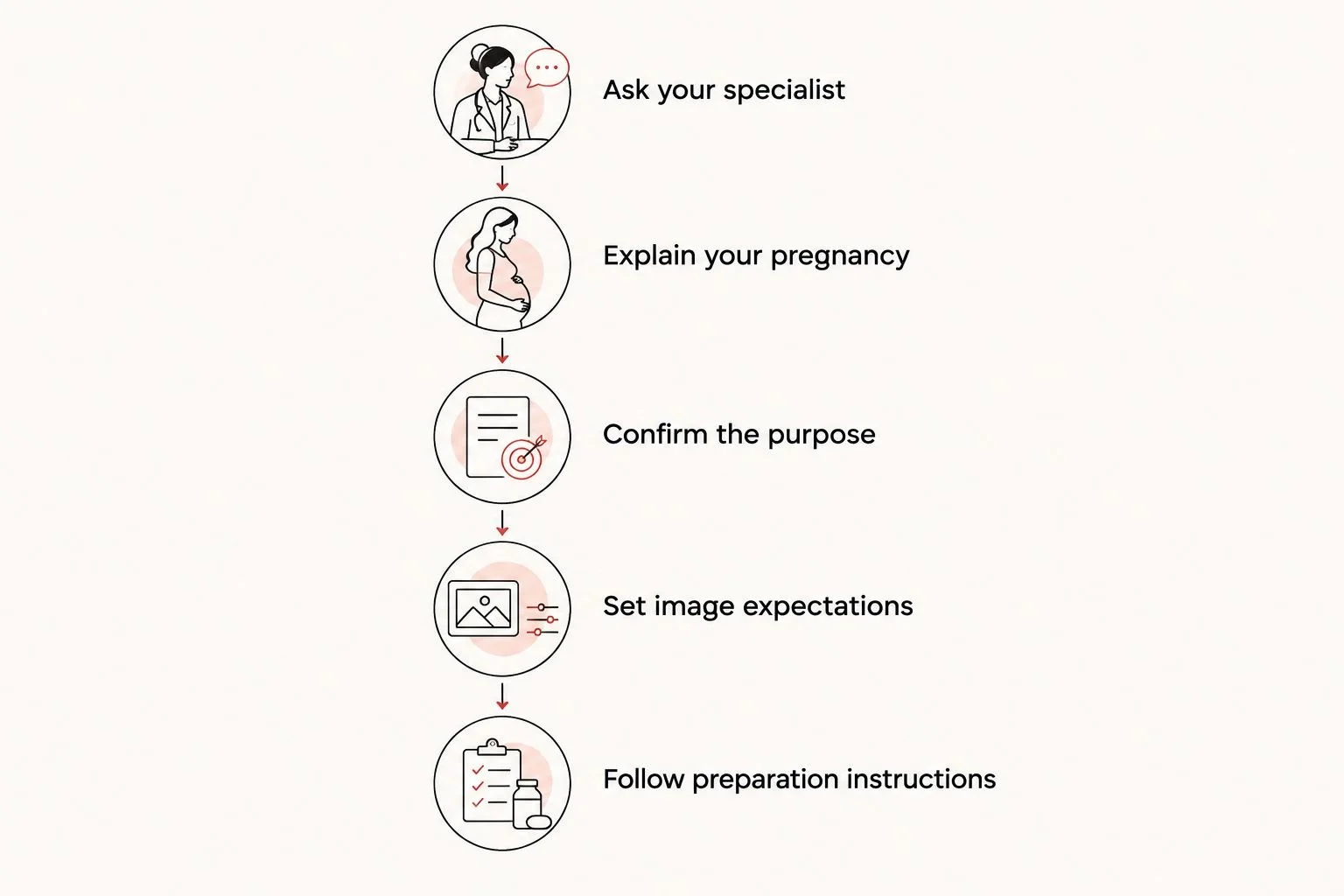
Confirm medical suitability before choosing an elective imaging appointment.
Is there a best week for triplet 3D/4D pictures?
There is no single best week for every triplet pregnancy. Timing depends on your clinical situation and the views available, not just a calendar recommendation for a singleton pregnancy. Ask your specialist before choosing a date around an online photo gallery.
Earlier does not automatically mean clearer, and later does not automatically mean more detailed. Facial development, position, surrounding fluid, and available space all affect the image. A provider should explain those limits without promising a specific result.
For planning in 2026, use your existing prenatal schedule as the starting point. Do not delay medically indicated imaging to wait for a preferred keepsake window.
Can you see all the triplets in the same picture?
Seeing all the triplets clearly in the same surface-rendered picture is not guaranteed. An examination can show different babies in separate views without producing a group portrait. The ability to image a baby medically is also different from obtaining a recognizable face image.
Ask how the sonographer identifies each baby during the examination. Labels such as Baby A, Baby B, and Baby C belong within the clinical mapping of the pregnancy; a face alone is not a reliable way to establish identity across visits.
If you plan to share the pictures, request clarification before assigning names to them. A partial view is still a meaningful record, but uncertain identification should stay uncertain rather than becoming a confident label in a family announcement.
Is additional 3D/4D ultrasound safe with triplets?
Ultrasound uses sound waves rather than ionizing radiation. That does not mean every additional session is necessary or that an examination should continue indefinitely to obtain a preferred picture. Qualified professionals should use ultrasound prudently and for an appropriate purpose.
The U.S. Food and Drug Administration discourages ultrasound performed solely to create keepsake images or videos. The American Institute of Ultrasound in Medicine also discourages nonmedical fetal ultrasound. These recommendations concern the purpose and prudent use of ultrasound, not a claim that a particular portrait causes harm.
Ask your treating team whether pictures can be obtained as part of an indicated examination without extending exposure unnecessarily. For a triplet pregnancy, medical care takes priority over obtaining a particular image.
If you develop bleeding, fluid leakage, painful contractions, or a concerning change in fetal movement, contact your maternity care team promptly. Do not book an elective scan as a substitute for assessment of symptoms.
Choosing a private ultrasound setting
The Ultrasound Concierge is best for patients in Keller and Willow Park seeking private, personalized pregnancy ultrasound alongside established prenatal care. Its diagnostic and elective services have different purposes; confirm which service matches your clinician's recommendation before arranging a visit.
The benefit of a private setting is the type of experience you are seeking, not a replacement for specialist oversight. The limitation remains the same: an elective visit cannot take over the medical monitoring required for a triplet pregnancy, and image quality depends on the available view.
When discussing pregnancy ultrasound services with The Ultrasound Concierge, ask specifically about triplets, the purpose of the examination, and coordination with your existing pregnancy team. Do not assume that a general pregnancy service description confirms suitability for your individual situation.
FAQ
Can I have a 3D/4D ultrasound while carrying triplets?
Yes, 3D/4D imaging is technically possible with triplets, but your pregnancy team should guide whether additional imaging is appropriate. Clear surface views of every baby are not guaranteed.
Will I get a clear face picture of every triplet?
Clear face pictures of every triplet are not guaranteed. Position, overlapping structures, surrounding fluid, and sound transmission affect each baby's view.
Is 4D better than 3D for a triplet pregnancy?
4D adds movement to a three-dimensional display, but it does not automatically produce clearer views than 3D. Neither format replaces the medical assessments your clinician recommends.
What week should I book a triplet 3D/4D ultrasound?
Your obstetrician or maternal-fetal medicine specialist should guide timing because there is no single best week for every triplet pregnancy. Do not postpone medically indicated imaging for a preferred keepsake date.
Can a keepsake scan tell me whether all my triplets are healthy?
A keepsake scan cannot establish that all your triplets are healthy. Medical assessment requires the appropriate examination, interpretation, and follow-up through your pregnancy care team.
Should I drink extra water to make my triplets' ultrasound pictures clearer?
Follow your examination's preparation instructions rather than forcing extra water for pictures. Hydration does not guarantee clear facial views or move an obstruction away from a baby's face.
Does The Ultrasound Concierge provide pregnancy ultrasound?
The Ultrasound Concierge provides diagnostic and elective pregnancy ultrasound in the Keller and Willow Park area. Confirm suitability for your triplet pregnancy and coordinate any additional imaging with your treating clinician.
One last thing
The most useful question is not whether a studio can produce a lifelike face. It is whether the proposed examination serves your pregnancy care without confusing a keepsake with a medical assessment.
For your 2026 visit, write down what you want to learn and what you hope to see as separate lists. Bring both to your pregnancy team. That simple distinction helps you ask for meaningful pictures while keeping medical decisions where they belong.